How To Read Your Birth Chart For Beginners
Looking at a birth chart for the first time can feel overwhelming, but it doesn't have to stay that way. Once you understand the basics, those mysterious symbols begin to tell a fascinating story about who you are.
Author:Marcus ValeJul 29, 20261 Shares18 Views
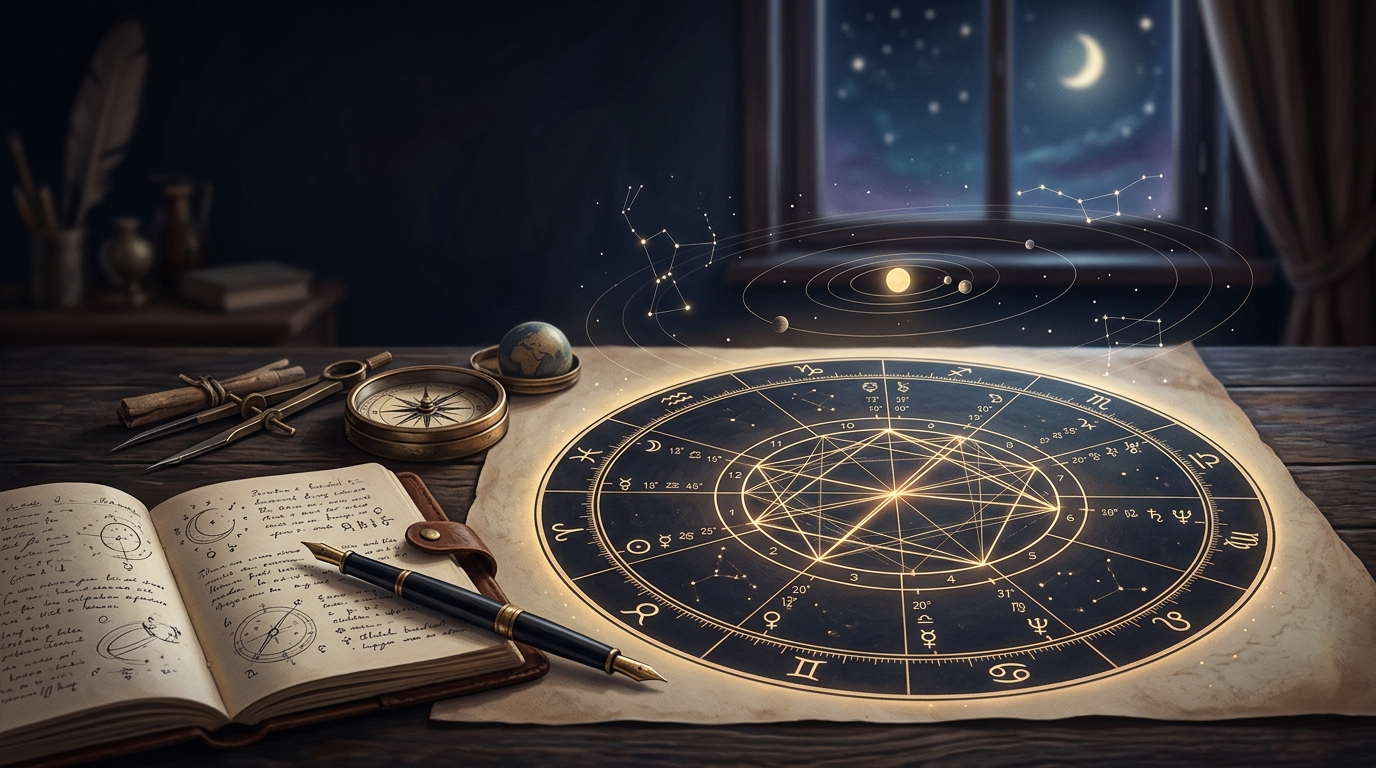
I still remember the first birth chart I ever looked at. It was mine, printed off some early 2000s website, a circle crowded with symbols that meant absolutely nothing to me at the time. I remember thinking it looked more like a diagram from a physics textbook than anything spiritual. Two decades later, I read charts for a living, and I promise, the wheel gets a lot less intimidating once someone actually walks you through it piece by piece. So let's do that.
What A Birth Chart Actually Is
Your birth chart, sometimes called a natal chart, is a map of exactly where the Sun, Moon, and planets sat in the sky at the moment and place you were born. Astrologers plot this onto a circular wheel split into twelve sections, each one tied to a zodiac sign, and further divided into twelve houses that represent different areas of life.
To generate an accurate one, you need your birth date, birth time, and birth location, and the time matters more than people usually expect. Being off by even twenty minutes can shift your rising sign and reshuffle your entire house structure.
Start With The Big Three
Every beginner should start with what's often called the Big Three: your Sun sign, Moon sign, and Rising sign, also known as the Ascendant.
Your Sun sign is the one you already know, and it represents your core identity, your basic sense of self, worked out simply from your birth date.
Your Moon sign reflects your inner emotional world, the part of you that shows up in private, in comfort, in vulnerability. It shifts roughly every two and a half days, which is exactly why an accurate birth time matters so much here.
Your Rising sign comes from your exact birth time and location. It's the mask you show the world, your first impression, and it sets up the entire house structure of your chart. Two people born on the same day in different cities, or even a few hours apart, can end up with completely different rising signs.
Understanding The Houses
Once your rising sign anchors the wheel, everything else falls into place around the twelve houses, each governing a different life theme. The first house covers identity and self-image. The fourth is home and family roots.
The seventh is partnership and marriage. The tenth is career and public reputation. You don't need to memorize all twelve on day one, but knowing the basic themes explains why a planet's placement carries the weight it does.
Planets Are The Actors In Your Story
If houses are the stage, planets are the actors playing out roles on it. The Sun is your core self and vitality. The Moon is emotion and instinct. Mercury governs communication and how you think. Venus shows how you love and what you find beautiful.
Mars is drive, ambition, and how anger tends to come out of you. Jupiter expands whatever it touches, bringing growth and sometimes luck. Saturn is discipline and limitation, the lessons that take the longest to actually learn. The outer planets, Uranus, Neptune, and Pluto, move slowly and describe generational shifts almost as much as personal ones.
Reading A Placement In Practice
Here's the simple formula for interpreting any placement: planet, plus sign, plus house. Say your Mars sits in Gemini in the third house. You'd likely express drive and assertiveness through words, debate, or sharp, quick communication, and that energy plays out specifically in the areas the third house governs, things like communication, siblings, and short trips. Once that formula feels natural, you can start piecing together your whole chart on your own, one placement at a time.
Aspects: How Planets Talk To Each Other
The last layer beginners should pick up is aspects, the geometric angles planets form with one another across the wheel. A conjunction, where two planets sit close together, blends their energies tightly. A trine, at 120 degrees, tends to flow easily. A square, at 90 degrees, creates friction and, usually, growth through that tension.
An opposition, sitting directly across the wheel, often points to a need for balance between two competing energies. You won't need to calculate these by hand; most tools handle it automatically, but understanding what they mean lets you interpret your own chart with real nuance instead of guessing.
Where To Actually Look At Your Chart
You'll need software or an app to generate an accurate chart, since working out planetary positions by hand requires an ephemeris and a fair amount of patience with math. For beginners, I'd look for something that doesn't just spit out symbols but explains each placement in plain language, since raw glyphs aren't much use when you're just starting out.
That's exactly why I point a lot of newcomers toward starfect.io, which lays out your full birth chart with clear explanations for every planet, sign, and house, tracks your ongoing personal lifecycles as they shift over time, and lets you ask it direct, astro-backed questions when you're facing a decision and want a read grounded in your actual chart rather than a generic horoscope.
Give Yourself Time
Learning to read a birth chart is a slow burn, not something you master in an afternoon, and I still find new layers in my own chart after twenty years of doing this. Start with your Big Three, get comfortable with the houses, then slowly layer in the other planets and their aspects. The chart isn't going anywhere. That patience, honestly, is part of what makes the whole process worth doing.

Marcus Vale
Author
Marcus Vale is the founder of Island Flave and a travel writer covering global destinations, famous places, island escapes, cultural landmarks, and the people connected to remarkable locations around the world.
Guided by curiosity and careful research, Marcus explores what makes places memorable — from history, food, festivals, and local traditions to the artists, athletes, musicians, actors, icons, and public figures linked to certain cities, islands, neighborhoods, and landmarks.
At Island Flave, Marcus creates clear, well-researched, and easy-to-read guides built around public information, responsible storytelling, and helpful destination context. His writing focuses on cultural relevance, neighborhood-level insight, travel value, and the public stories and cultural connections that help readers understand where to go, what a place is known for, who is connected to it, and why it matters.
Rather than chasing gossip or private details, Marcus focuses on the bigger picture: the places people talk about, the meaning behind them, and the cultural details that make them worth knowing.
Latest Articles
Popular Articles