How To Get To Catalina Island: Best Port By Starting Point (2026)
Don't book the wrong ferry. Discover the best port for your trip, updated 2026 costs, and luggage rules. Whether you're headed to Avalon or Two Harbors, find the fastest way over here.
Author:Marcus ValeApr 22, 202640.7K Shares867.4K Views
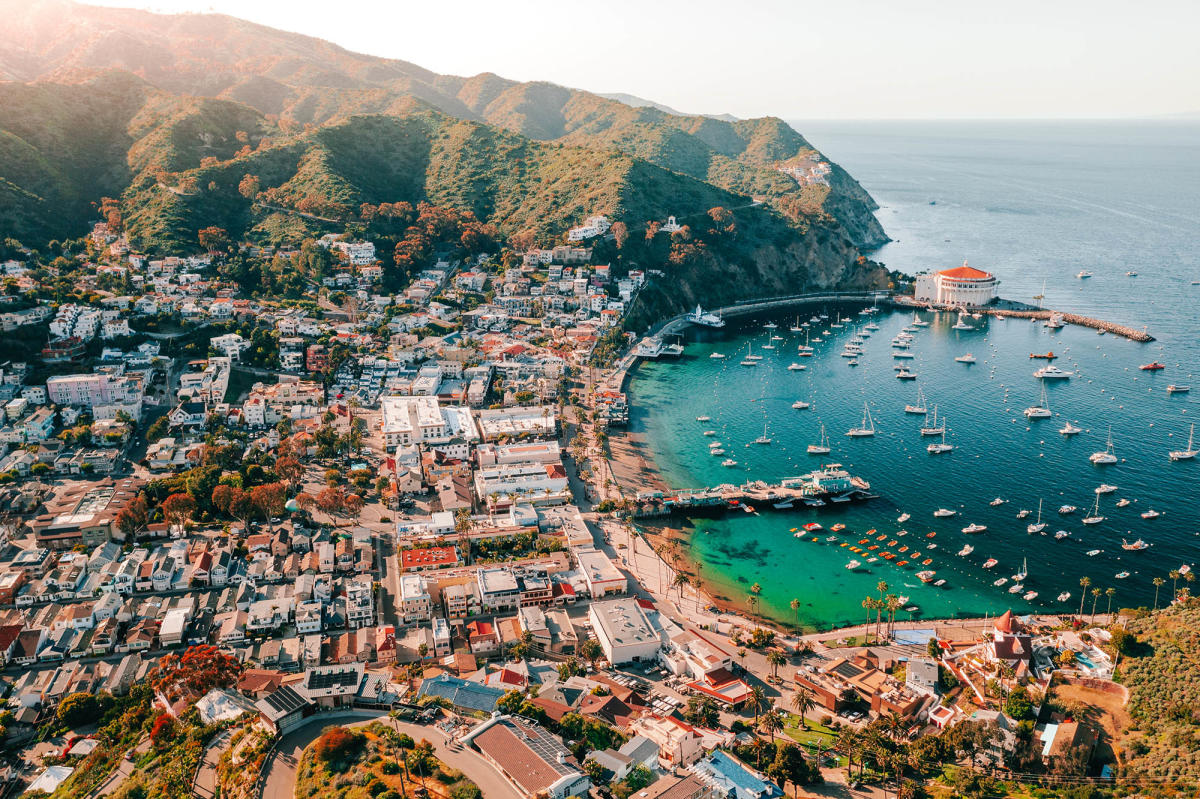
How To Get To Catalina Island: Best Ports, Ferry Options, And Costs
The hard part is rarely getting to Catalina Island. The hard part is choosing the route that makes sense for where you are starting, how much time you have, and whether you actually want Avalon or Two Harbors.
A traveler flying into LAX for a same-day island trip needs a different plan than a couple driving up from San Diego for a slower weekend.
That is where most Catalina articles fall short. The smartest way to plan this trip is to decide in this order: your starting point, your mainland port, your island landing point, then your transport mode and budget.
Official Catalina tourism and operator pages support that logic because ferry serviceleaves from four different mainland ports, most arrivals go to Avalon, and only certain routes work well for Two Harbors.
Key Takeaways
- Most visitors get to Catalina Island by passenger ferry.
- Long Beach and San Pedro are usually the best starting ports for much of Los Angeles; Dana Point often makes more sense for south Orange County and many San Diego travelers; Newport Beach is a strong fit for central Orange County.
- Avalon is the right landing point for most first-time visits and day trips. Two Harbors is better for camping, boating, and a quieter west-end experience.
- Ferry is usually the simplest and cheapest mainstream option. The helicopter is the fastest premium option.
- Prices, schedules, and parking can change, so confirm the live details with the operator before you book.
Choose The Best Way To Get To Catalina Island For Your Trip Type
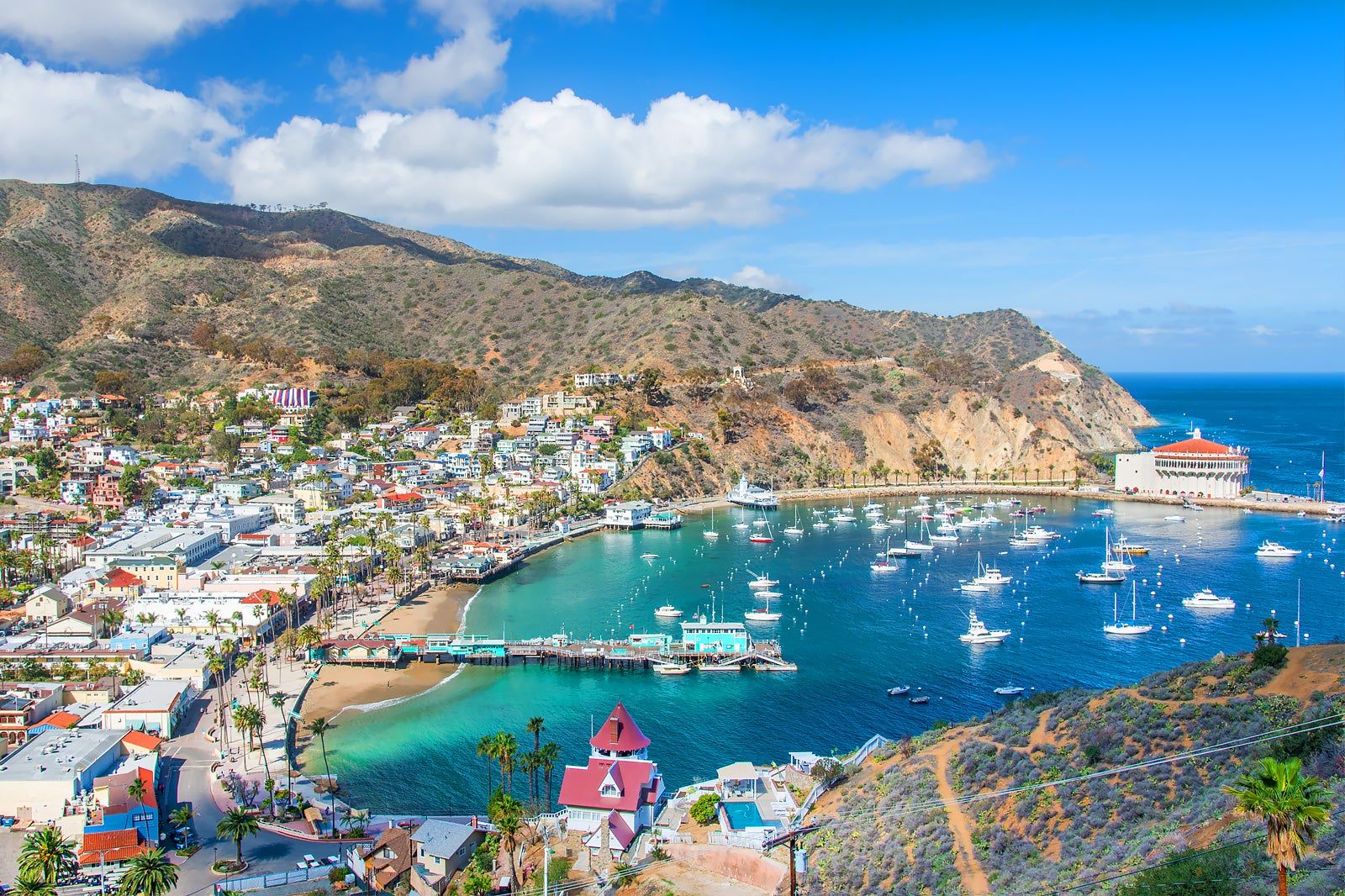
This section helps narrow the transport mode first, so the rest of the planning feels simpler. For most readers, the answer will be ferry, but not always.
Why The Ferry Is The Default For Most Travelers
The ferry is the default because it balances price, convenience, and availability better than any other option.
Official Catalina tourism pagesdescribe passenger ferry as the most popular way to get to the island, with service from Long Beach, San Pedro, Dana Point, and Newport Beach, and most crossings taking about an hour or a little more, depending on the route.
It is also the most forgiving option for first-timers. You can compare ports, book round-trip tickets, park on the mainland, and arrive directly into the part of the island most visitors actually want to use.
That makes ferry the safest starting recommendation for day trips, couples’ weekends, and first Catalina visits.
When A Helicopter Is Worth Paying More For
Helicopter starts making sense when time matters more than budget. Official Catalina tourism pages describe air travel as about 15 minutes to Avalon, while Maverick’s current booking page lists flights from $199, with 15-minute service from Long Beach and 30-minute service from Santa Monica.
There is one nuance worth respecting: current official Catalina tourism pages and Maverick’s own booking pages do not perfectly mirror each other on every mainland departure point.
That is a sign to treat helicopter routing as live inventory, not fixed brochure text. If the traveler needs the fastest arrival, a helicopter is the premium choice. If they want the least complicated booking flow, the ferry still wins.
When A Private Boat Or Private Aircraft Makes Sense
Private boat makes sense for people who already boat, charter groups, or want full schedule control. Catalina’s official tourism pages note that many visitors sail over and use moorings in Avalon or Two Harbors, while charter and freight options are also available.
Private aircraft is the most niche option. Catalina’s official by-air page says there is no commercial air service, but private aircraft can use Airport in the Sky, where the Conservancy charges a landing fee and runs the Wildlands Express shuttlebetween the airport and Avalon.
| Option | Best for |
| Ferry | First-timers, day trips, lowest-friction planning |
| Helicopter | Travelers who value speed more than price |
| Private boat | Boaters, charters, flexible schedules |
| Private aircraft | Pilots or travelers already flying privately |
The biggest takeaway is simple: start by assuming ferry unless your budget, schedule, or travel style gives you a clear reason not to.
Pick The Right Mainland Port Before You Book Anything
This is the section that saves the most frustration. A wrong port choice can make the whole trip feel longer, more expensive, and more rushed than it needed to be.
Long Beach: Best For Frequent Departures And Many LA-Area Travelers
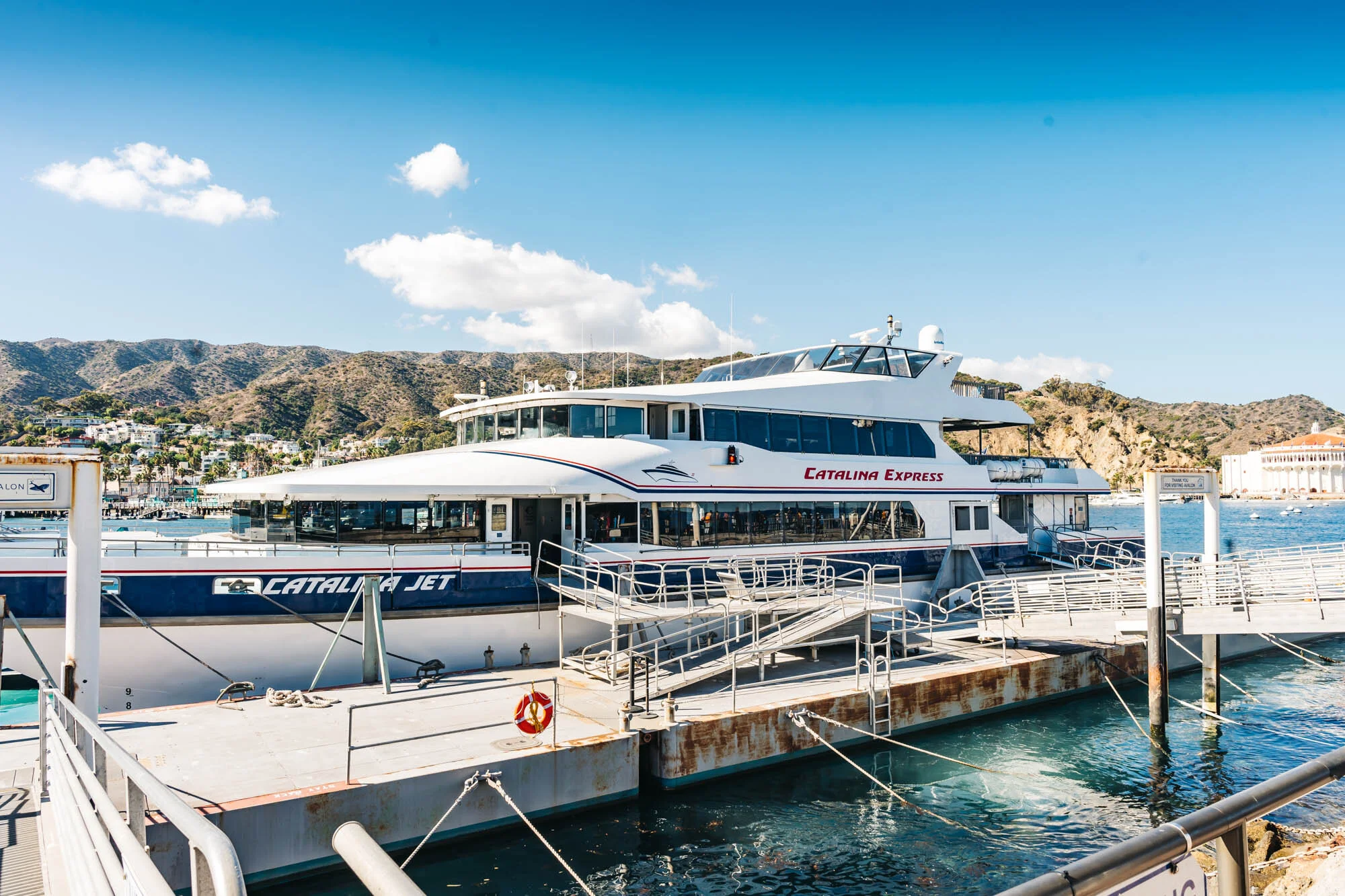
Long Beach is the most broadly useful port for many visitors because it is accessible from Los Angeles, Orange County, or San Diego, and the Catalina Express lists Long Beach/Avalon crossings at about 1 hour. The terminal sits at Catalina Landing in downtown Long Beach.
For a traveler staying in LA proper, Long Beach is often the cleanest choice when the schedule fits. It is especially strong for Avalon-focused trips.
San Pedro: Strong Fit For Lax And Two Harbors Planning
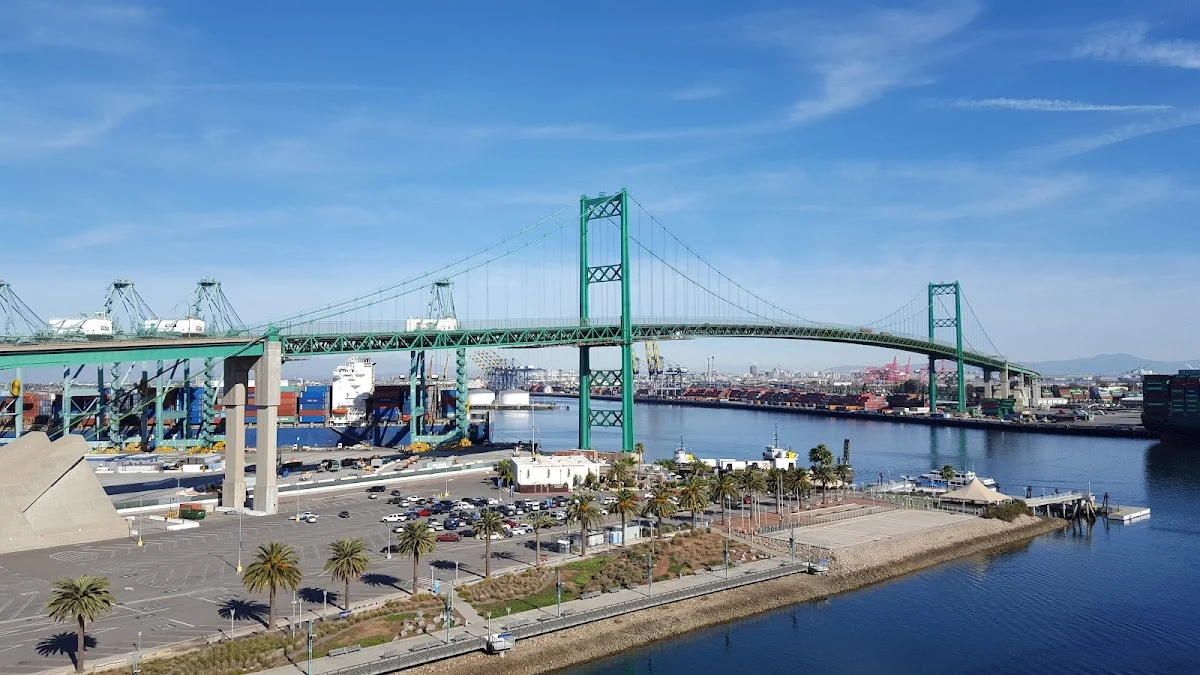
San Pedro is often the smartest recommendation for travelers coming from LAX or from the west side of Los Angeles. Catalina Express lists San Pedro/Avalon at about 1 hour 15 minutes, and the same terminal also serves San Pedro/Two Harbors, which makes it the most important port if the traveler is not headed to Avalon.
That Two Harbors point matters. If the trip is built around camping, boating, hiking, or a quieter west-end experience, San Pedro jumps to the front of the list.
Dana Point: Easiest For South Orange County And Many San Diego Travelers
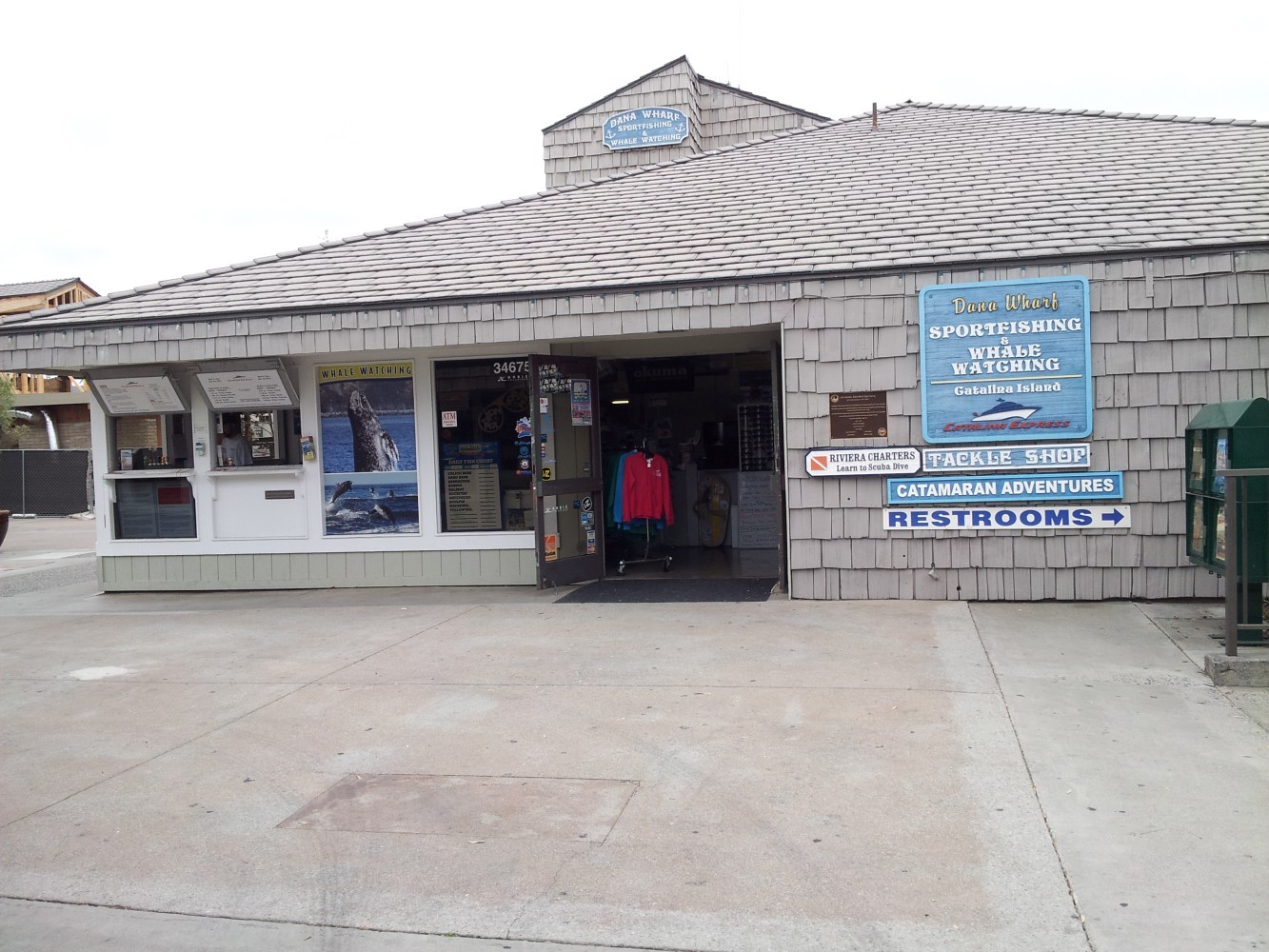
Dana Point is a practical place for many travelers south of central Orange County. Catalina Express says the port is convenient for San Diego or Orange County, recommends arriving 60 minutes early, and lists Dana Point/Avalon at about 1 hour and 30 minutes.
A San Diego traveler who sees Los Angeles to Catalina content can easily assume they should drive north to Long Beach first. In practice, Dana Point is often the lower-friction move.
Newport Beach: Strongest Fit For Central Orange County And Some Southbound Travelers
Newport Beach is the Catalina Flyer port, and official Catalina pages position it as especially convenient for John Wayne Airport (SNA) and Orange County locations. Catalina Flyer’s official pages describe several daily departures between Newport Beach and Avalon, with the crossing listed at 75 minutes on current booking pages.
For someone already based in central Orange County, Newport can be the easiest path to Avalon without needing to drive farther north or south.
Quick Decision Table: Best Port By Starting Point
| Where you’re starting | Best mainland port |
| West LA / LAX | San Pedro first, Long Beach second |
| Downtown LA / much of LA County | Long Beach or San Pedro |
| Long Beach / LGB | Long Beach |
| Central Orange County / SNA | Newport Beach |
| South Orange County | Dana Point |
| San Diego County | Dana Point first, Newport Beach second |
| Going to Two Harbors | San Pedro |
These pairings follow the way official Catalina tourism and operator pages describe port convenience, route coverage, and island arrival points.
Once the mainland port is right, the rest of the trip stops feeling like guesswork.
Decide Where On Catalina You Actually Want To Land
Many readers treat Catalina Island as one arrival point. That is the second-biggest planning mistake after choosing the wrong mainland port.
Avalon: Best For First-Timers, Day Trips, And Classic Catalina Experiences

Avalon is where most transportation arrives, and it is the best fit for first-time visitors, short trips, and anyone who wants walkable dining, tours, hotels, and easy harbor access. Official Catalina pages explicitly say that the majority of transportation arrives in Avalon.
That is why Avalon is usually the right answer for a day trip. It is the most plug-and-play arrival.
Two Harbors: Best For Camping, Boating, And Quieter West-End Trips
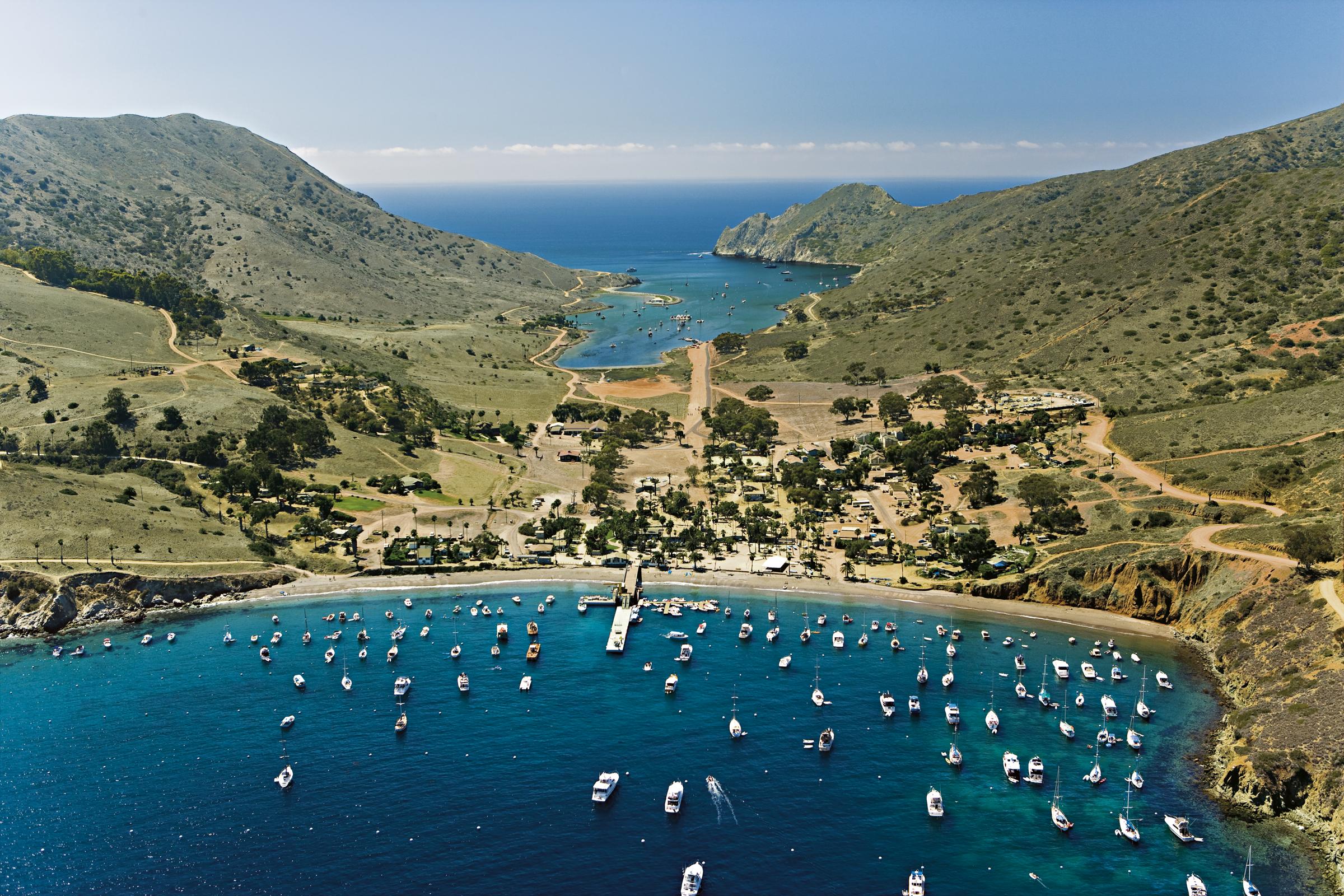
Two Harbors is the better fit for travelers who want a more rugged, slower, and less built-up experience. Official Catalina and Catalina Express pages show that San Pedro is the key mainland gateway for the Two Harborsferry service.
This is where camping, boating, and quieter outdoor itineraries start to make more sense than classic Avalon sightseeing.
Why The Wrong Landing Point Creates A Bad Itinerary
A traveler can absolutely move between Avalon and Two Harbors, but it is not automatic. Official Catalina pages note that the Cyclone speed boat between Avalon and Two Harbors is seasonal and takes less than 40 minutes, while Love Catalina’s puts the ride at about 40 minutes.
That means the wrong landing point can add an extra leg, extra cost, and a weaker day-trip rhythm. The better move is to choose the island side first, then book the mainland route that matches it.
Compare Ferry Operators, Crossing Times, And What To Expect
This section gives the practical comparison most readers actually need. The goal is not to crown a winner. The goal is to match the operator to the route.
Catalina Express: Routes, Strengths, And Best Use Cases
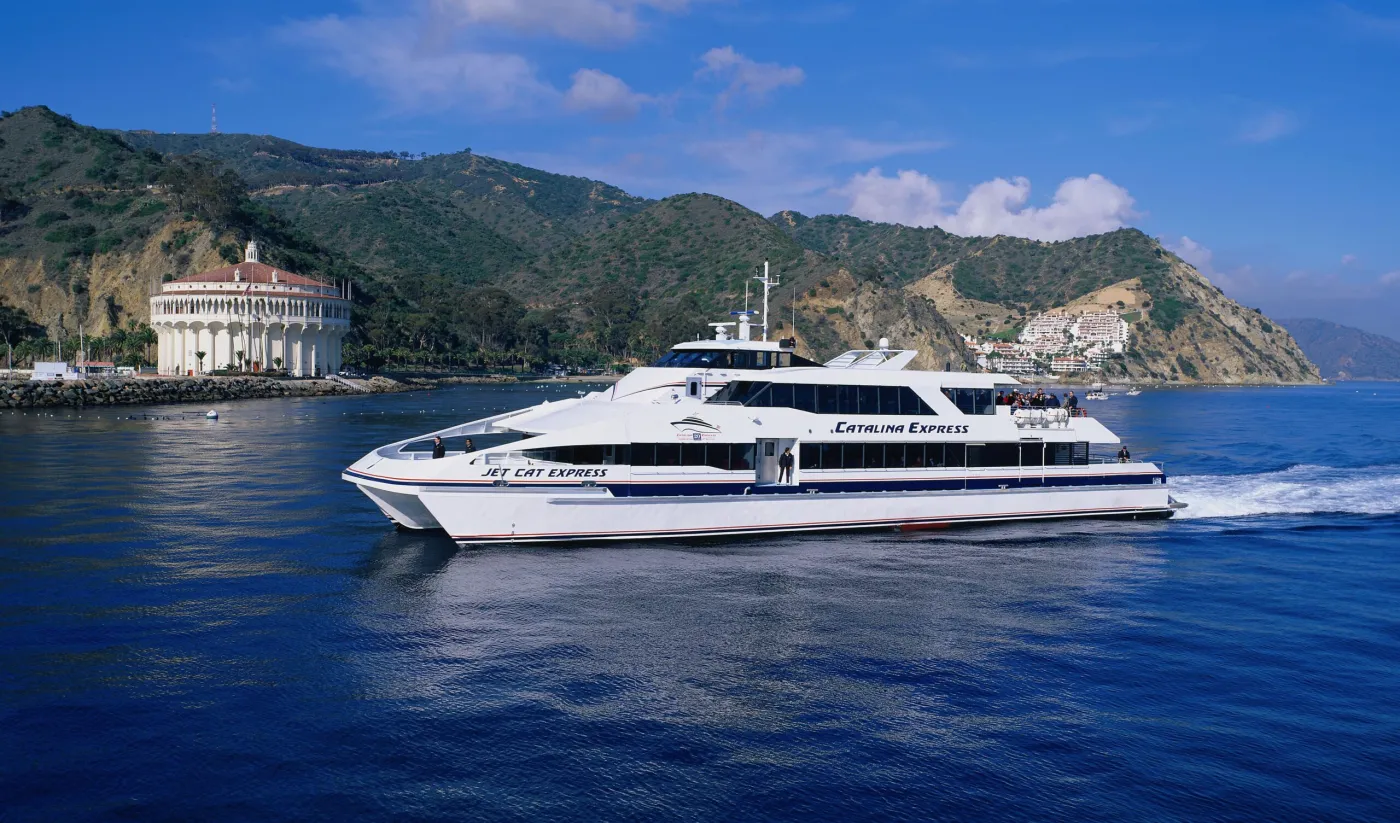
Catalina Express is the broader-network operator. Official pages show daily service from Long Beach, San Pedro, and Dana Point to Avalon, plus San Pedro to Two Harbors, with up to 30 daily departures mentioned on Catalina tourism pages.
Its strongest use cases are:
- LA-area travelers
- LAX travelers
- Anyone wanting more port choice
- Anyone going to Two Harbors
- Travelers who want the widest schedule coverage
Catalina Flyer: Routes, Strengths, And Best Use Cases
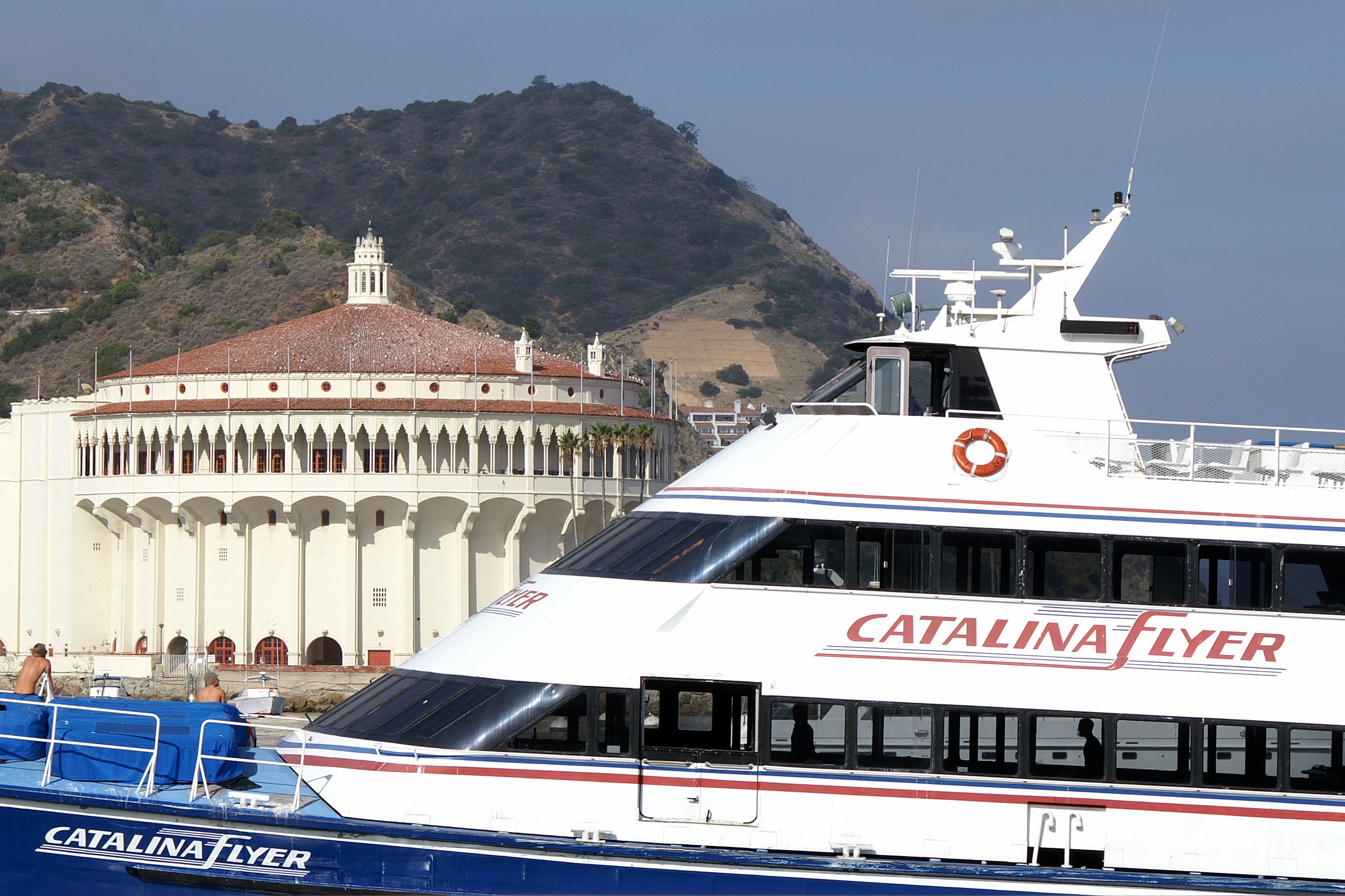
Catalina Flyer is the Newport Beach to Avalon option. Official pages describe it as a large passenger catamaran with several daily departures, and current booking pages show 75-minute crossings.
Its strongest use cases are:
- Central Orange County travelers
- SNA-based trips
- Travelers who want Newport Beach specifically
- Avalon-focused day trips and weekend stays
Crossing Time, Check-In, Baggage, And Parking Realities
Most ferry rides are about an hour to 75 minutes, with San Pedro/Avalon and San Pedro/Two Harbors both around 1 hour 15 minutes, Long Beach/Avalon around 1 hour, Dana Point/Avalon around 1 hour 30 minutes, and Catalina Flyer currently around 75 minutes.
Official Catalina passenger-ferry guidance also says passengers 16 or older need a photo ID to board, and all baggage must carry an ID tag and may be inspected.
For terminal timing, Catalina Express says ticket windows open one hour before the first sailing, and Dana Point explicitly recommends arriving 60 minutes before departure.
The Two-Bag Rule: Both Catalina Express and Catalina Flyer generally enforce a two-bag limit per person(plus one small carry-on). If you are staying overnight, pack efficiently; space on the catamarans is optimized for passengers, not a moving van's worth of luggage.
Camping Gear: If you are heading to the west end to camp, note that camping gear is handled differently. Most operators require gear to be in rugged, closed bags (no loose sleeping bags or open crates) and often have a 50 lb weight limit per item.
Photo ID is Mandatory: Official passenger-ferry guidance requires all travelers 16 or older to present a valid government-issued photo ID to board. Digital copies on your phone are often rejected; bring the physical card.
Pro Tip for Day Trippers: If you have a heavy bag but aren't staying overnight, look for the luggage storage lockers or Blue Boy baggage service near the Avalon cab stands. It’s worth the few dollars to not haul a cooler or backpack around the hills of Avalon all day.
What Changes For Busy Weekends And Day Trips
Busy weekends punish late planning. The traveler who wants a relaxed Avalon day trip should care less about shaving ten minutes off the crossing and more about getting the right outbound and return windows from the right port.
Catalina Express also notes that schedules can change, holidays and weekends vary, and current availability should be checked in the reservation system.
The key point is this: operator matters, but route fit matters more.
How Much Does It Cost To Get To Catalina Island
This section gives the cost structure readers actually need, not just a headline fare. The smartest budget decision is the one that includes parking, transfer costs, and the value of convenience to you.
Ferry Cost Range And What Usually Gets Added
Catalina Express currently publishes adult round-trip totals of $99 for Long Beach/Avalon, $97 for San Pedro/Avalon, and $92 for San Pedro/Two Harbors.
Dana Point/Avalon is published at $98 before April 14, 2026, and $106 as of April 14, 2026. These totals already include the listed island wharfage fee and tax. Data as of April 2026; verify live rates before booking.
Catalina Flyer’s current booking pages show one-way fares from $47 Newport Beach to Avalon, and $39 Avalon to Newport Beach, which means sample round-trip pricing can start around $86, but live pricing depends on the sailing selected. Data as of April 2026; verify live rates before booking.
Parking, Rideshare, And Airport-To-Port Costs People Forget
This is where cheap and easy start to split. Catalina Express currently lists daily parking in Long Beach at $24.95 through April 7, 2026, and $26.95 starting April 8, 2026.
San Pedro parking is listed at $23 per day, and Dana Point parking is $24 per day. Data as of April 2026; verify live rates before travel.
That means the cheapest ferry fare is not always the cheapest total trip. A lower ticket price can be erased by a longer drive, airport transfer, or pricier parking.
Helicopter And Premium Alternatives
Maverick currently advertises Catalina transfers for $199, with flight times of 15 minutes from Long Beach and 30 minutes from Santa Monica. Data as of April 2026; verify live rates before booking.
For most travelers, a helicopter is not the cheapest way to Catalina Island. It is the time-saving luxury option.
Simple Cost Comparison Table
| Option | What to expect in terms of cost |
| Ferry | Lowest mainstream price, but add parking or transfer costs |
| Helicopter | Much faster, much more expensive |
| Private boat | Costs vary widely by ownership or charter |
| Private aircraft | Niche option with landing-fee logistics |
The real budgeting lesson is simple: compare total trip cost, not ticket price alone.
How To Get To Catalina Island From The Places People Search Most
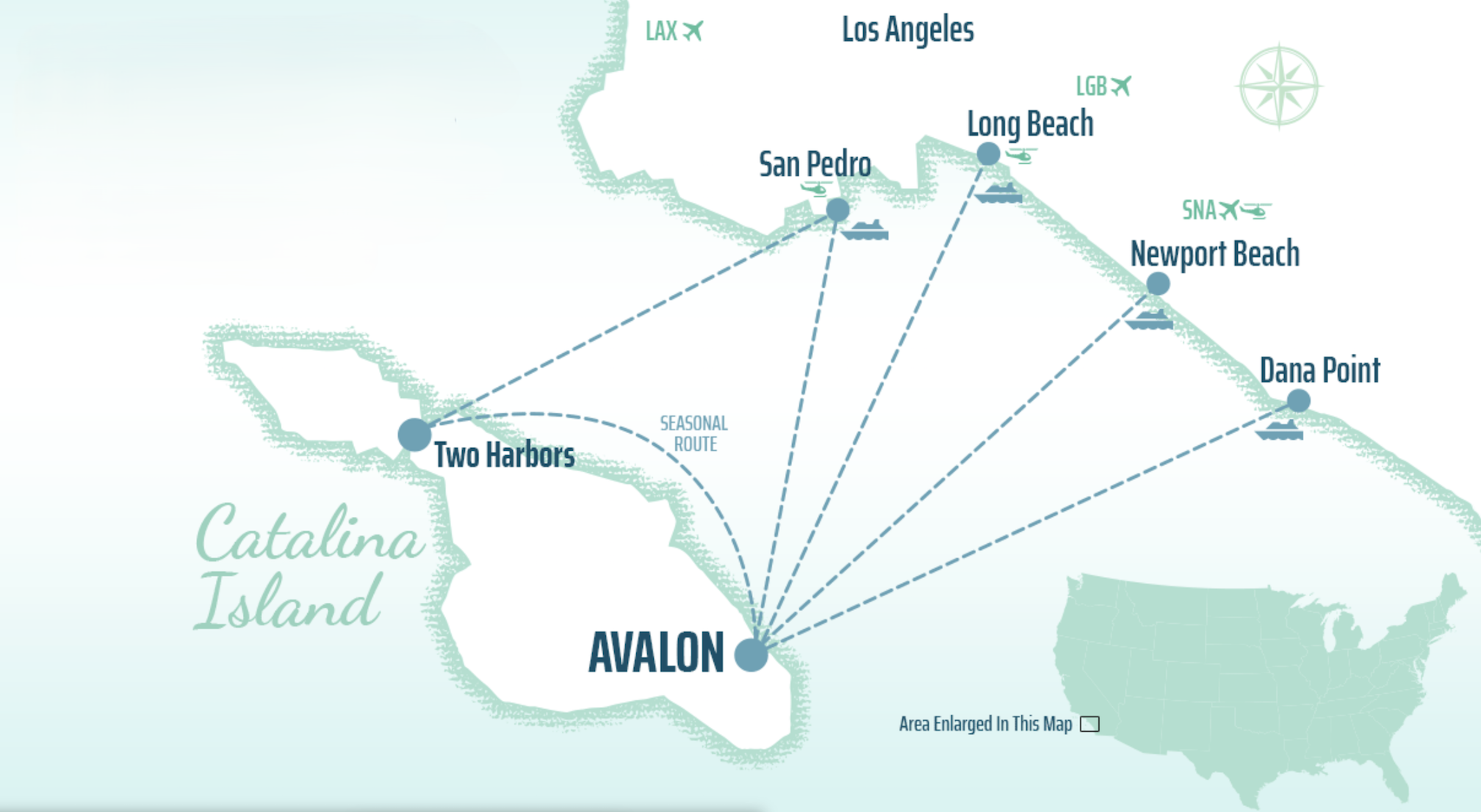
This section turns the general advice into route-ready planning. It is the fastest way for a reader to see their best option without rereading the whole article.
From Los Angeles
For much of Los Angeles, Long Beach, and San Pedro are the best ports. Long Beach is often the clean Avalon play. San Pedro is especially strong if the traveler is coming from the west side or wants to go to Two Harbors.
From Lax
There is no ferry from LAX itself. The move is to land at LAX, then transfer to San Pedro or Long Beach. Official Catalina tourism guidance specifically frames those LA County ports as convenient to LAX.
From Long Beach / LGB
For a traveler already near Long Beach Airport or in Long Beach, the obvious choice is Long Beach Port. It is the most direct mainland handoff to an Avalon trip.
From Orange County / SNA
A traveler using John Wayne Airport usually has two strong options: Newport Beach via Catalina Flyer or Dana Point via Catalina Express.
Official Catalina pages place Newport closest to SNA convenience, while Dana Point becomes more attractive for south-county positioning.
From San Diego
For many San Diego travelers, Dana Point is the first port to check. Official Catalina Express guidance says Dana Point is convenient for travelers coming from San Diego or Orange County. Newport Beach can also work, but it is usually the second look, not the first.
The pattern stays consistent: pick the port that reduces mainland friction first, then compare fares and schedules.
What Changes If You Are Planning A Day Trip Instead Of Staying Overnight
This is where the trip starts to feel either smooth or rushed. The transport choice should match the pace you want once you arrive.
When A Day Trip Works Well
A day trip works best when the traveler is headed to Avalon, uses a sensible port for their origin, and has enough buffer on both ends of the sailing.
Avalon is designed for the easiest arrival-and-walk experience, which is why it is the best landing point for most one-day visits.
When An Overnight Stay Is The Smarter Choice
An overnight stay becomes the stronger choice when the traveler is coming from farther away, wants a later ferry, is trying to combine multiple activities, or wants to experience more than the immediate harbor area.
That is especially true when the starting point is San Diego or when the traveler wants a less rushed weekend rhythm.
Where Catalina Island Hotels Fit Into The Decision
Hotels are not part of the transport decision at first, but they change how strict the transport timing needs to be.
A same-day Avalon traveler needs a tighter schedule. An overnight traveler gets more flexibility and usually more value from the crossing.
Love Catalina’s official site also positions hotel inventory and trip-planningresources alongside transport because most longer stays are built that way.
Illustrative Scenario
A traveler lands at LAX early, heads to San Pedro, takes the ferry to Avalon, walks the town, eats on the waterfront, and returns the same evening. That plan works because the route and the destination match.
Another traveler drives up from San Diego, leaves from Dana Point, and wants beaches, a slow dinner, and morning time on the island.
A slower Catalina weekend also usually comes with more downtime before and after the crossing, whether that is a drive up, terminal wait time, or a quick stretch at the hotel, so bringing a few travel gamescan make a trip feel smoother for couples, families, or anyone traveling with kids
That second traveler usually gets more out of a single overnight stay than from a compressed day trip.
The takeaway is not that one style is better. It is that transport and trip pace should agree with each other.
Common First-Timer Mistakes I Would Avoid
This section is about friction, not fear. Catalina is easy to reach once a few avoidable planning mistakes are taken off the table.
Booking The Wrong Mainland Port
This is the biggest mistake because it affects drive time, parking, and the odds of a rushed itinerary.
Many travelers search the keyword broadly, then book whichever ferry result they see first. The better move is to choose the port that matches your real starting point.
Ignoring Avalon Vs Two Harbors
Catalina is not a one-terminal destination in practical terms. Avalon and Two Harbors support different kinds of trips, and not every mainland port serves them the same way.
Underestimating Parking And Check-In Time
Official pages repeatedly tell travelers to treat terminal timing seriously. Dana Point says to arrive 60 minutes early, and Catalina’s passenger-ferry guidance requires photo ID for passengers 16 and older.
Assuming You Can Bring Your Car, Or Just Sort Transport Out Later
You cannot rely on bringing a vehicle over. Love Catalina’s official FAQ says there are no car ferries for visitors and that visitors are not allowed to transport vehicles to the island.
Pre-booking Checklist
- Choose Avalon or Two Harbors first.
- Choose the mainland port that best matches your starting point.
- Check the live sailing times for your actual date.
- Confirm parking cost and process.
- Bring photo ID if you are 16 or older.
- Do not assume you can bring a car to the island.
The good news is that these are all easy problems to avoid once the route is chosen in the right order.
Frequently Asked Questions
What Is The Easiest Way To Get To Catalina Island?
For most travelers, the easiest option is a passenger ferry from the mainland port closest to where you are starting. That keeps the planning simple and the arrival straightforward.
What Is The Cheapest Way To Get To Catalina Island?
Usually, the cheapest mainstream option is the ferry, not the helicopter. The lowest total cost depends on ticket price plus parking or transfer costs.
How Much Does It Cost To Go To Catalina Island?
Ferry pricing varies by route and operator. Catalina Express currently publishes adult round-trip totals from the low $90s to low $100s, while Catalina Flyer booking pages currently show one-way fares starting at $47 and $39 on sample sailings. Data as of April 2026; verify live rates.
How Long Is The Ferry Ride?
Most ferry rides take about an hour to 75 minutes, depending on the port. Dana Point runs longer at about 1 hour and 30 minutes.
Which Port Is Best From Los Angeles?
For many Los Angeles travelers, Long Beach or San Pedro are the best choices. San Pedro is especially strong if the trip involves Two Harbors.
Is There A Ferry From Lax?
No ferry departs from LAX. You first need to reach a mainland ferry port such as San Pedro or Long Beach.
Can I Bring My Car To Catalina Island?
No. Official Catalina guidance says visitors cannot transport cars to the island on a standard ferry. Plan to park on the mainland instead.
Do I Need A Passport?
No. Catalina Island is part of Los Angeles County in California, so domestic travelers do not need a passport.
Should I Choose Avalon Or Two Harbors?
Choose Avalon for a first visit, easy walking, and most day trips. Choose Two Harbors for camping, boating, and a quieter west-end trip.
Can I Do Catalina As A Day Trip?
Yes. Catalina works well as a day trip, especially if you are heading to Avalon and using a port that fits your starting point.
Do I Need A Hotel?
Not for a day trip. A hotel becomes worth it when you want a slower pace, more activities, or a longer mainland journey.
Conclusion
The cleanest way to plan this trip is still the same: start with where you are, choose the right mainland port, choose Avalon or Two Harbors, then compare ferry and helicopter based on time and cost.
For most readers, that process leads to a simple answer: ferry is the right default, Avalon is the right first landing point, and the best port is the one that removes the most mainland friction.
Once those three decisions are made, Catalina stops feeling complicated and starts feeling close.
Jump to
How To Get To Catalina Island: Best Ports, Ferry Options, And Costs
Choose The Best Way To Get To Catalina Island For Your Trip Type
Pick The Right Mainland Port Before You Book Anything
Decide Where On Catalina You Actually Want To Land
Compare Ferry Operators, Crossing Times, And What To Expect
How Much Does It Cost To Get To Catalina Island
How To Get To Catalina Island From The Places People Search Most
What Changes If You Are Planning A Day Trip Instead Of Staying Overnight
Common First-Timer Mistakes I Would Avoid
Frequently Asked Questions
Conclusion

Marcus Vale
Author
Marcus Vale is the founder of Island Flave and a travel writer covering global destinations, famous places, island escapes, cultural landmarks, and the people connected to remarkable locations around the world.
Guided by curiosity and careful research, Marcus explores what makes places memorable — from history, food, festivals, and local traditions to the artists, athletes, musicians, actors, icons, and public figures linked to certain cities, islands, neighborhoods, and landmarks.
At Island Flave, Marcus creates clear, well-researched, and easy-to-read guides built around public information, responsible storytelling, and helpful destination context. His writing focuses on cultural relevance, neighborhood-level insight, travel value, and the public stories and cultural connections that help readers understand where to go, what a place is known for, who is connected to it, and why it matters.
Rather than chasing gossip or private details, Marcus focuses on the bigger picture: the places people talk about, the meaning behind them, and the cultural details that make them worth knowing.
Latest Articles
Popular Articles