How To Easily Make Hummingbird Food: The Safe 4:1 Nectar Recipe
Make hummingbird nectar the safe way: learn how to easily make hummingbird food (4:1), store leftovers in the fridge, and avoid toxic ingredient mistakes.
Author:Marcus ValeApr 15, 2026346 Shares345.6K Views
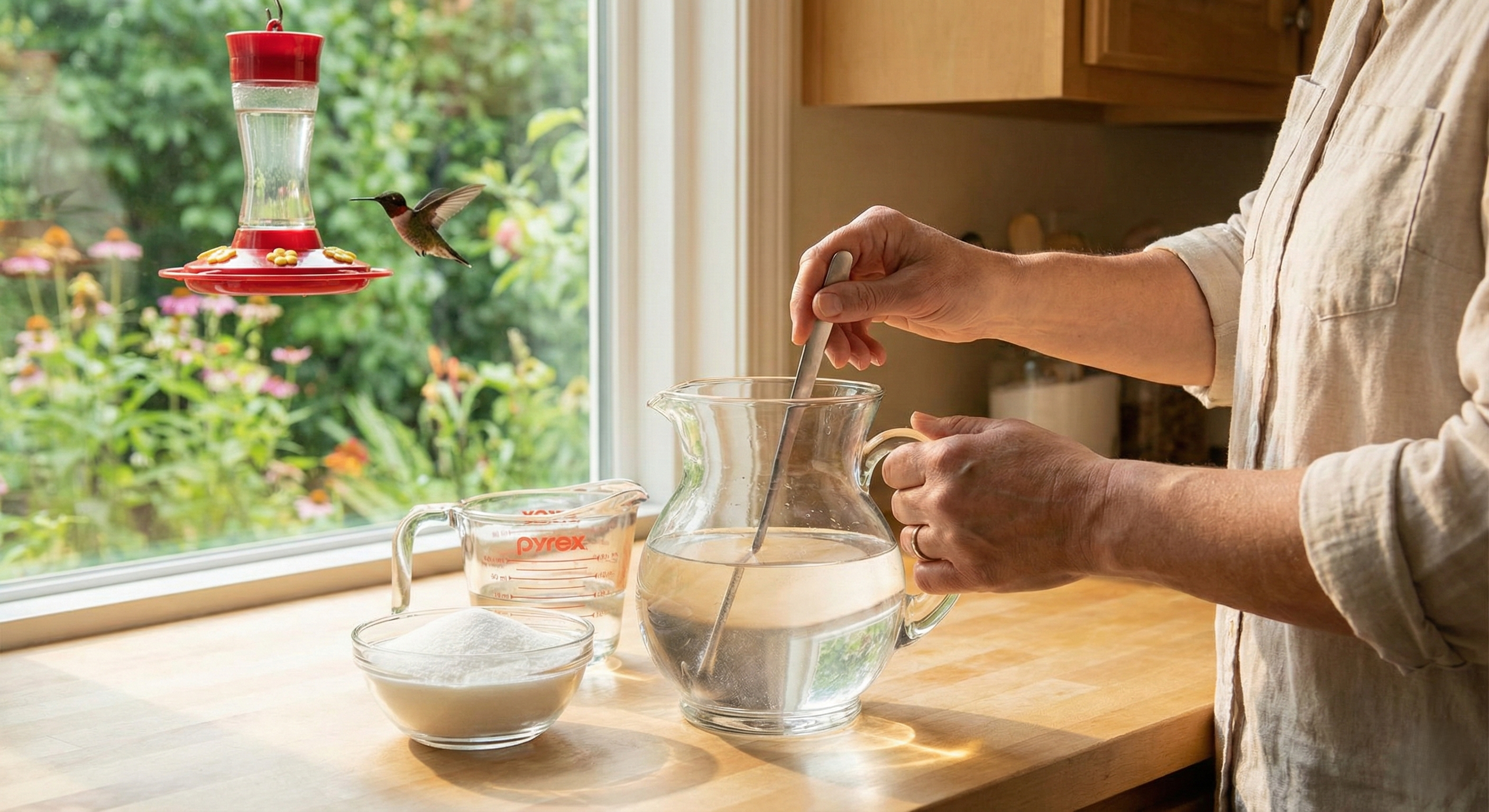
How To Easily Make Hummingbird Food: Mimicking Natural Nectar
Imagine watching a beautifully animated sequence where a tiny, iridescent character darts across the scene at sixty wingbeats per second.
Sustaining that incredible, high-speed biology requires an exact, reliable source of energy. To bring these living jewels into your garden, you must provide a fuel source that perfectly mirrors the floral nectarthey seek out in the wild.
Supplying the safest, most precise formula ensures these birds remain healthy and energized for their long migrations.
Key Takeaways:
- Ratio:Exactly 4 parts water to 1 part refined white sugar.
- Mix:Combine 1 cup of hot water with 1/4 cup of white sugar.
- Stir:Agitate the mixture continuously until the sugar granules are completely dissolved.
- Cool:Allow the liquid to cool entirely to room temperature before filling your feeder.
- Safety:Never introduce red food coloring, honey, agave, or raw/organic sugars to the mixture.
The Universal 4:1 Hummingbird Food Recipe
Crafting the perfect artificial nectar is an exercise in restraint and exact proportions. By sticking strictly to the foundational basics, you provide a high-energy resource that accurately mimics the sucrose levels found naturally in blooming flowers.
Ingredients And Equipment Needed
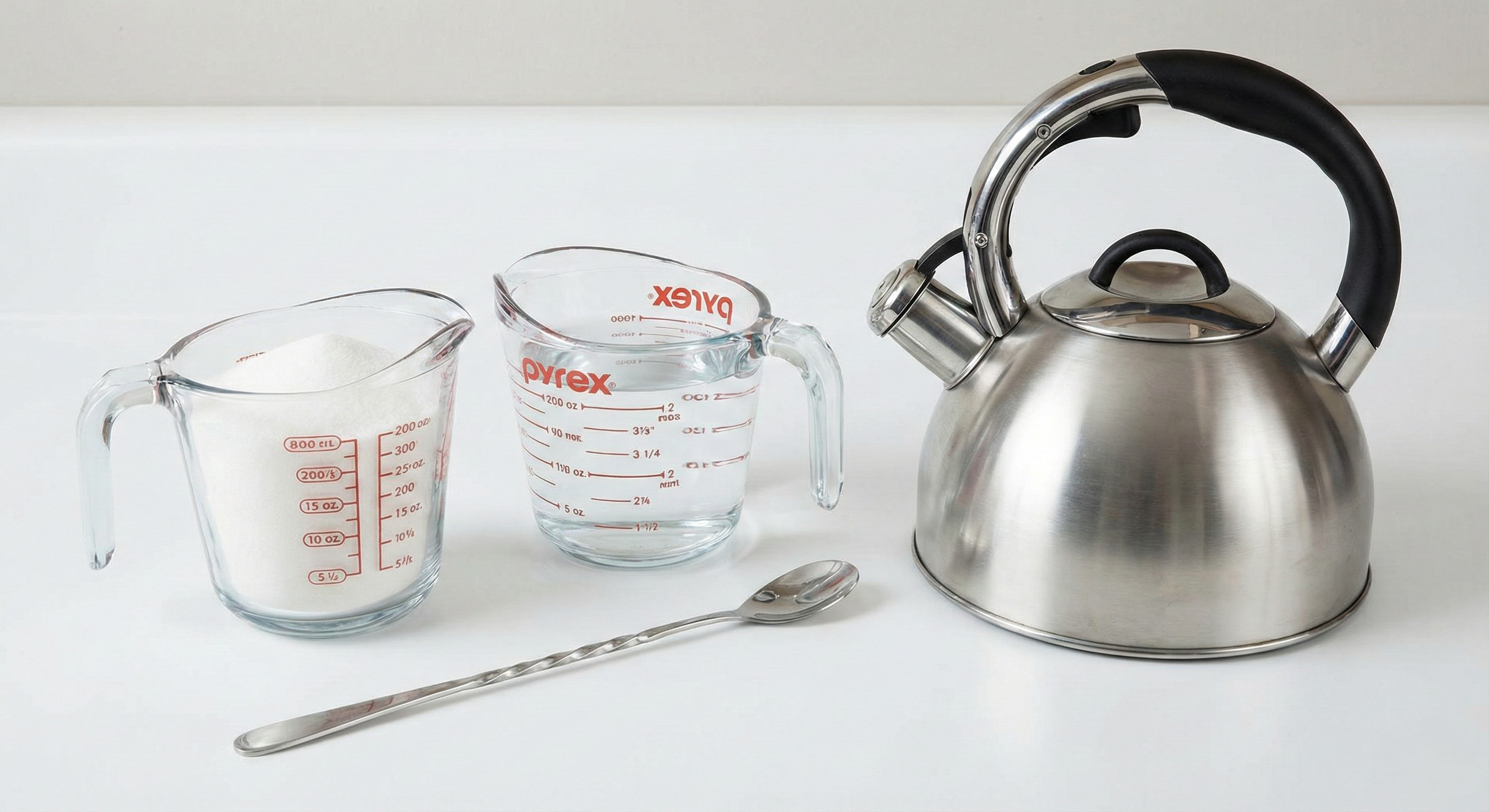
You only need two ingredients to create safe, effective hummingbird food: standard tap or filtered water, and refined white table sugar.
Avoid the temptation to complicate the process. You will also need a clean glass measuring cup, a stirring spoon, and a standard pot or kettle to heat the water.
Keeping your tools clean is just as important as the ingredients themselves, as bacterial contamination can quickly ruin a fresh batch.
Step-by-Step Instructions
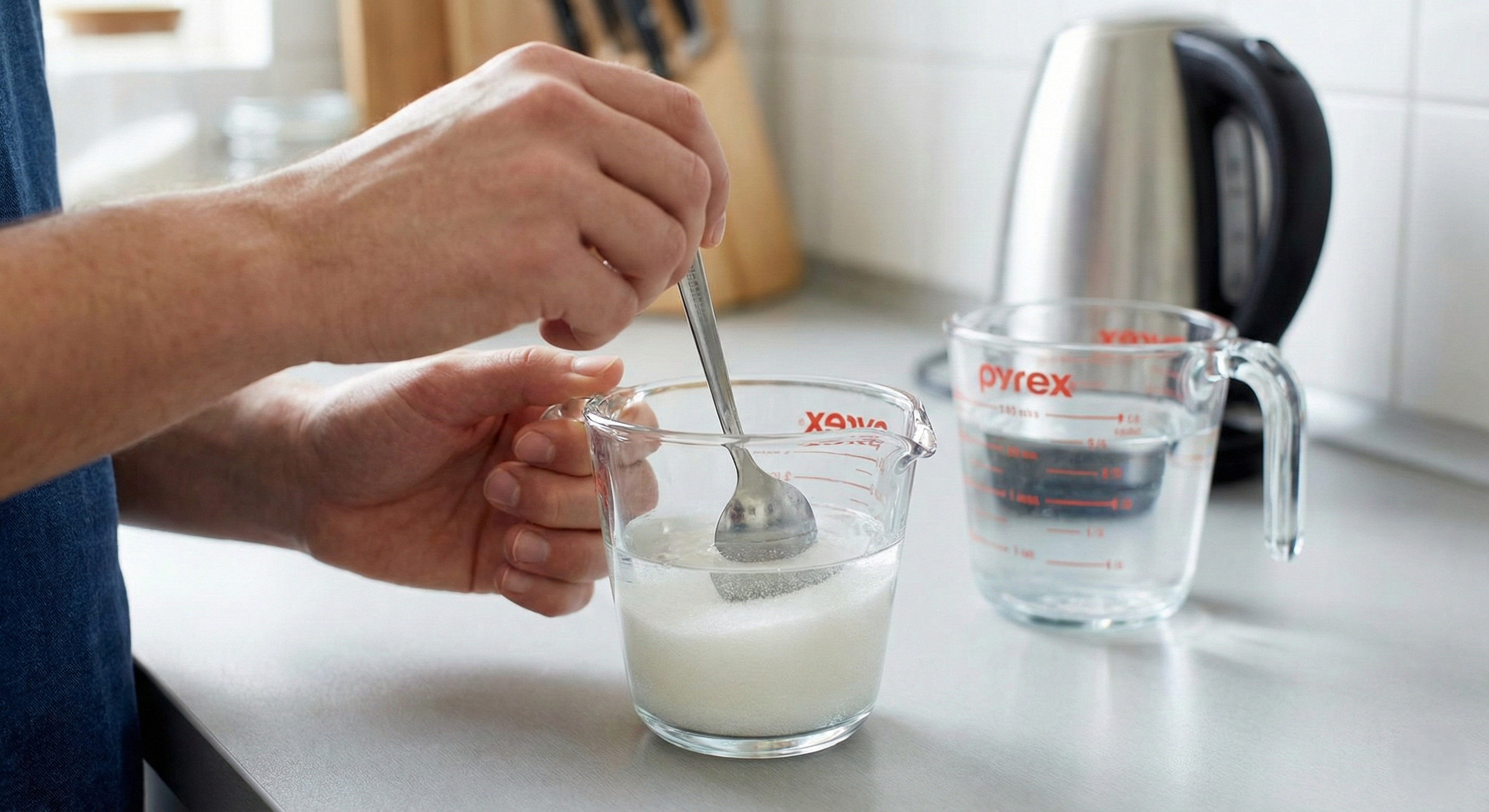
Begin by measuring out exactly one part of refined white sugar. Next, measure four parts of water. For a standard backyard feeder, using 1/4 cup of sugar and 1 cup of water is the ideal starting volume.
Pour the warm or hot water into your glass measuring cup or heat-safe bowl, and immediately add the sugar.
Stir the solution vigorously. You must continue stirring until every single grain of sugar disappears, leaving the liquid completely transparent.
Once the solution is crystal clear, let it sit on your counter. Do not pour it into the feeder until it is entirely cool to the touch, as hot liquid can warp plastic feeders and harm the birds.
Do You Really Need To Boil The Water?
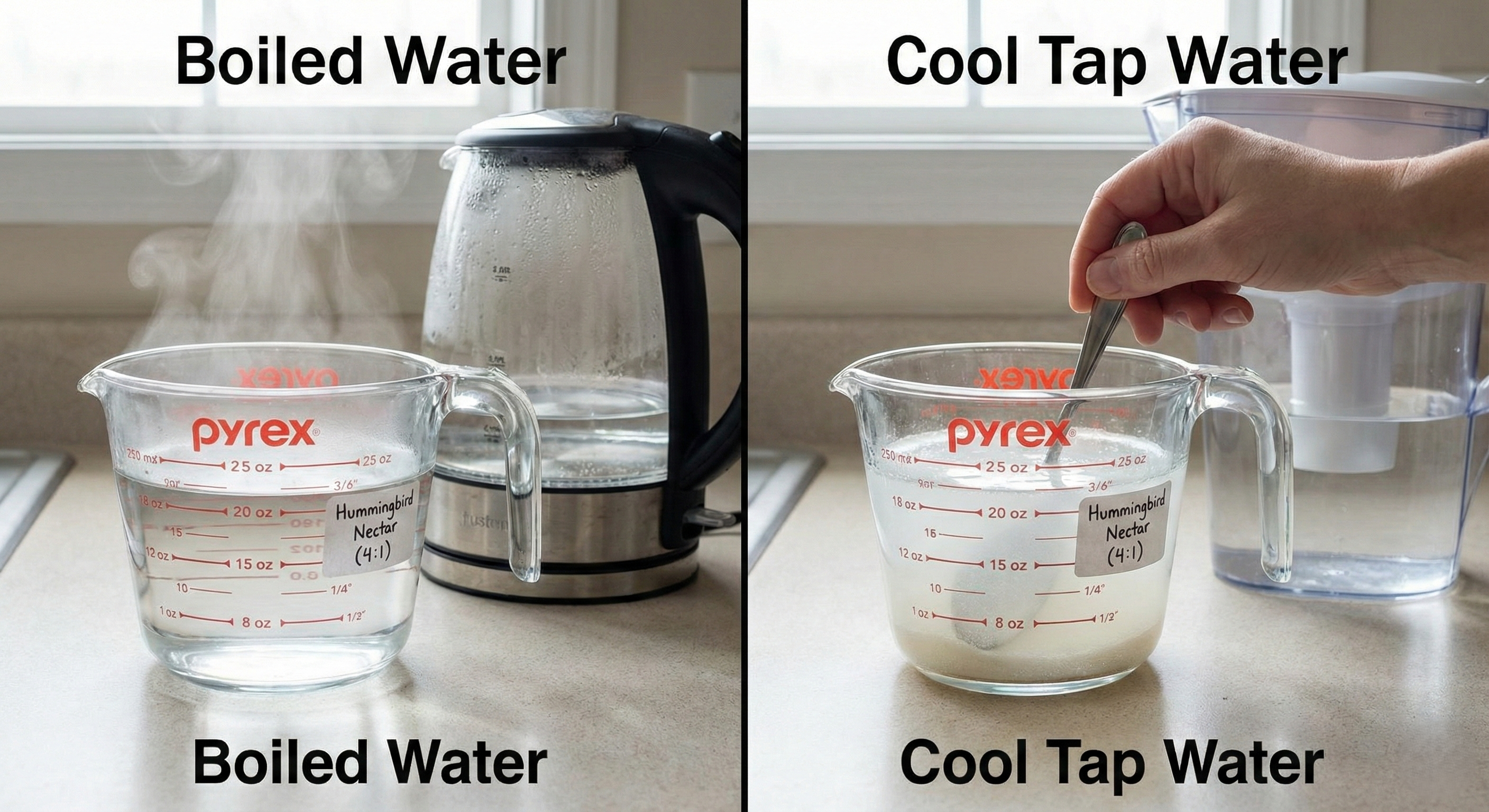
Boiling the water is highly recommended, but not strictly mandatory if your tap water is safe to drink. Heating the water serves two primary purposes: it neutralizes impurities that might promote premature fermentation, and it rapidly speeds up the dissolving process of the sugar.
If you choose to use room temperature filtered water, you must stir for a significantly longer period to ensure no undissolved sugar crystals settle at the bottom.
With the liquid clear and correctly proportioned, the next crucial step is understanding what must never contaminate this pristine mixture.
The Science Of Safety: What NEVER To Feed Hummingbirds
Good intentions can be fatal if you substitute ingredients without understanding avian biology. Treating a hummingbird feederlike a personal culinary experiment risks introducing toxic elements into a very fragile digestive system.
Why Refined White Sugar Is The Only Choice
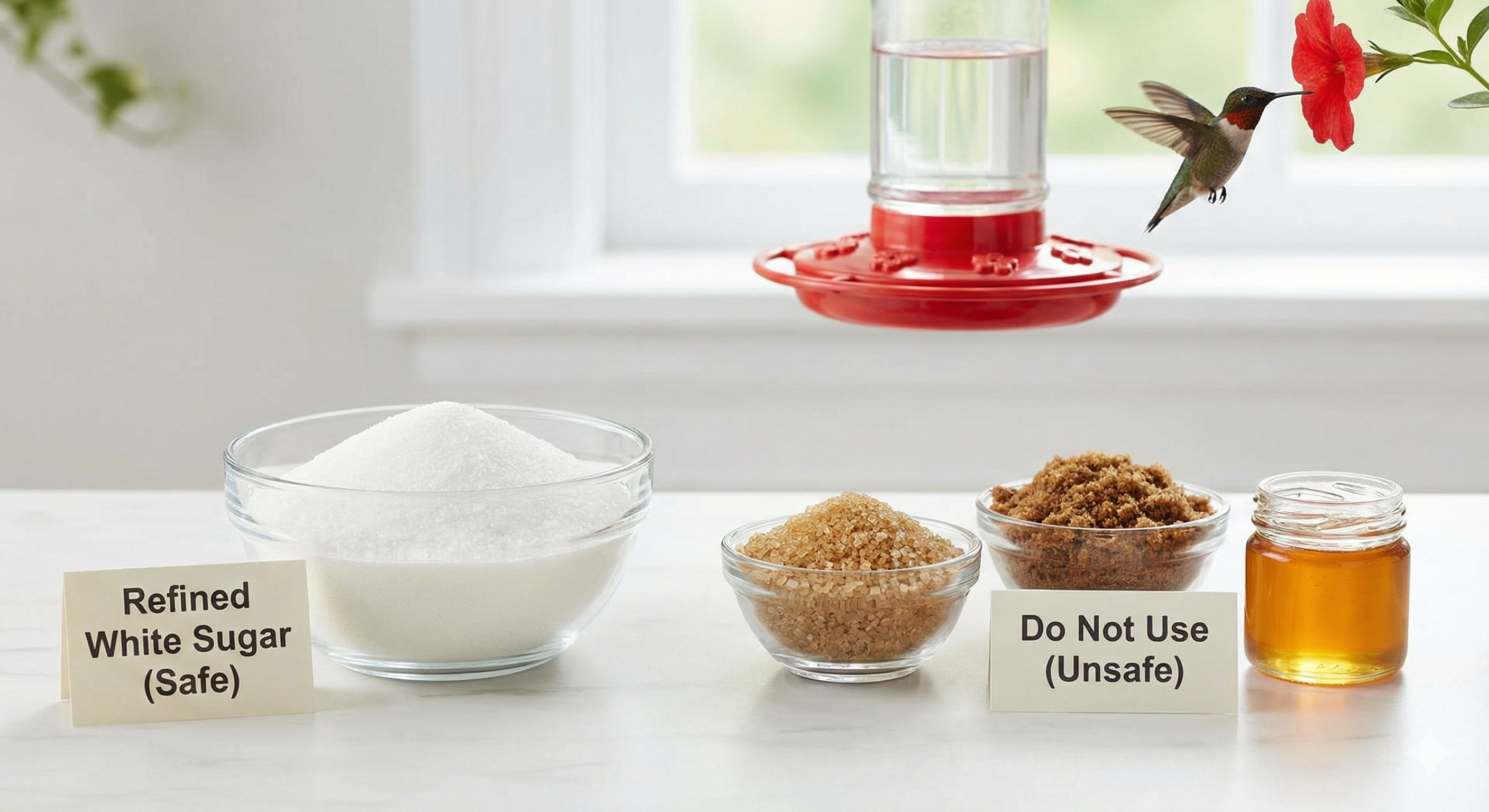
Hummingbird food is a simple, safe nectar substitute made by completely dissolving one part refined white sugar into four parts water.
According to the Smithsonian National Zoo, standard refined white table sugar, sucrose, is the only acceptable ingredient because it closely replicates the chemical composition of the nectar produced by the flowers these birds naturally visit.
It provides the instant, clean caloric energy they require to maintain their rapid heart rates and flight metabolism.
The Hidden Dangers Of Organic, Raw, And Brown Sugar Iron Toxicity
Stick to refined white sugar; organizations like Audubon advise against brown sugar, honey, or molasses because extra ingredients can be detrimental.
Because their natural diet of floral nectar and small insects contains almost no iron, their bodies have not evolved to excrete excess iron. Feeding them raw or organic sugar leads to a dangerous buildup in their liver, causing a fatal condition known as iron toxicity.
The Red Flag Ingredients Checklist:
- Honey:Harbors bacteria and fungi that cause deadly avian tongue infections.
- Raw/Organic Sugar:Contains trace amounts of iron that can cause fatal organ failure in hummingbirds.
- Agave Nectar:Spoils rapidly and does not provide the correct sucrose profile for avian energy.
- Artificial Sweeteners:Offer zero caloric value, causing the birds to starve to death while feeling full.
The Myth Of Red Food Coloring
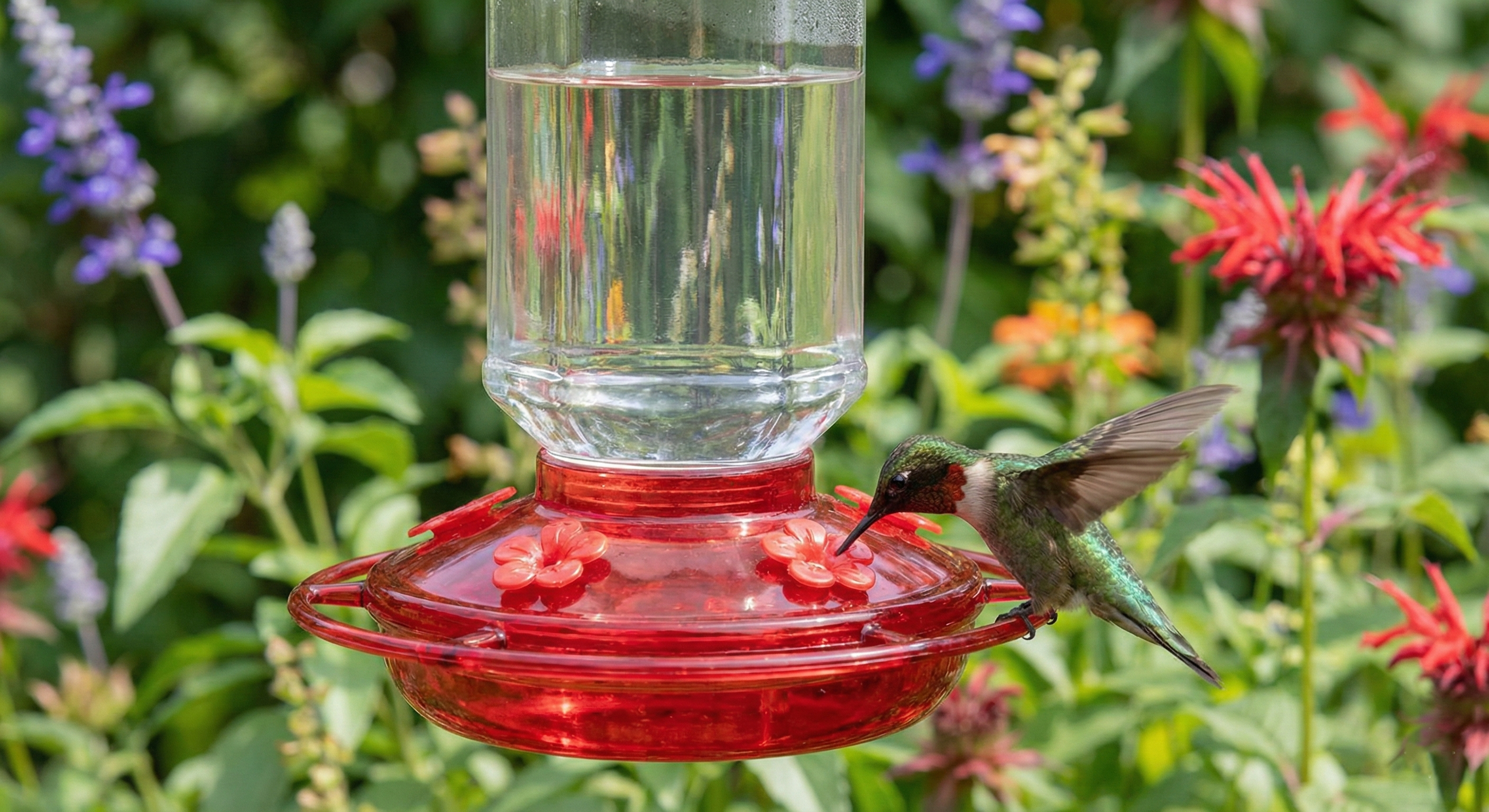
For decades, commercial nectars have been dyed red to attract birds, creating a persistent myth that the liquid itself must be colored. The National Audubon Society strongly advises against adding any artificial red dyes to homemade nectar.
The petroleum-based chemicals in food coloring offer no nutritional value and pose unnecessary health risks. The bright red plastic or glass components of your hummingbird feeder are more than enough visual stimulus to attract them to your garden.
Keeping the recipe strictly to pure white sugar ensures their internal health, but managing the feeder's environment is equally vital to prevent illness.
Scaling The Recipe: How Much Sugar For 1 Cup? And Beyond
It is a common temptation to mix a massive batch of nectar to save time, filling the largest feeder you can find to the brim. However, if that feeder is not emptied quickly, by day three in the summer sun, the liquid will turn cloudy and potentially toxic.
The secret to a healthy feeding station is scaling the Audubon-approved 4:1 ratio to match exactly what your local hummingbirds consume in a few days, thereby reducing waste and preventing spoilage.
Quick Scaling Guide:
- 1 Cup Water: Add 1/4 cup refined white sugar.
- 2 Cups Water:Add 1/2 cup refined white sugar.
- 4 Cups Water:Add 1 cup refined white sugar.
Water Quality:While standard tap or filtered water is perfectly safe, you should avoid using purely distilled water. Distillation strips away naturally occurring trace minerals that hummingbirds actually benefit from in the wild.
How Long Hummingbird Nectar Lasts In The Fridge Vs Feeder
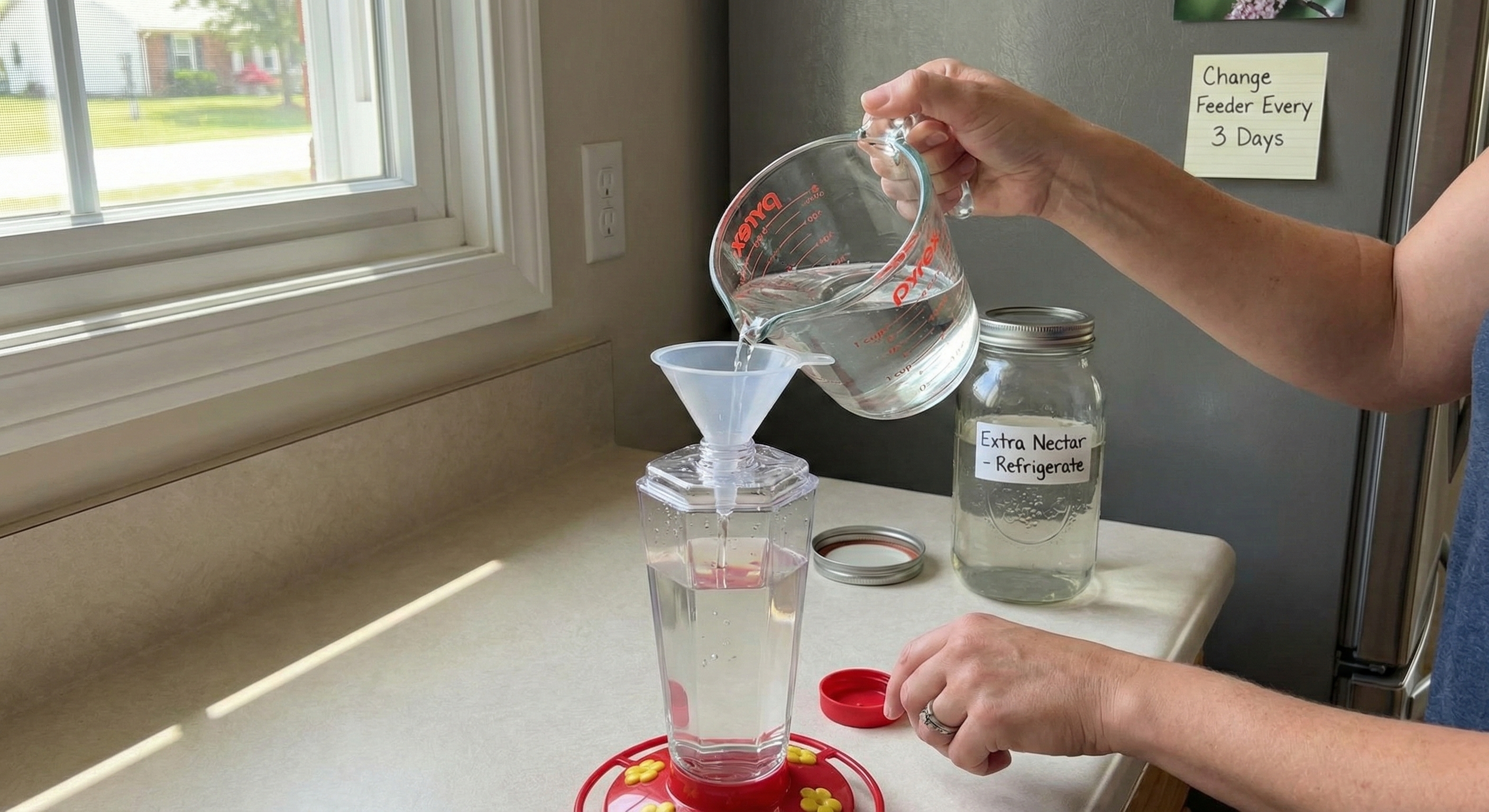
If the 4:1 ratio is the recipe, this is the timeline-so you know exactly when nectar is still fresh fuel and when it’s time to dump and remix.
Illustrative scenario:Someone mixes a bigger batch on Sunday, pours only what the feeder will use soon, then labels the rest Sun and parks it in the fridge, so nothing sits outside long enough to turn questionable.
In the fridge, unused nectar:
- Store extra nectar in a clean, covered container in the refrigerator.
- Use within up to 1 week when stored properly; longer than that can become moldy.
- Dump it sooner if it looks cloudy, has particles, or shows any mold.
In the feeder outdoors:
- Nectar spoils faster outside, especially in heat-so follow a weather-based change routine:
- Always discard any nectar left in the feeder when you take it down to clean.
Takeaway:Refrigeration buys you time for leftovers-but the feeder itself runs on a strict schedule, which is why the freshness-and-cleaning clock matters next.
The Freshness Clock: Keeping The Nectar Safe
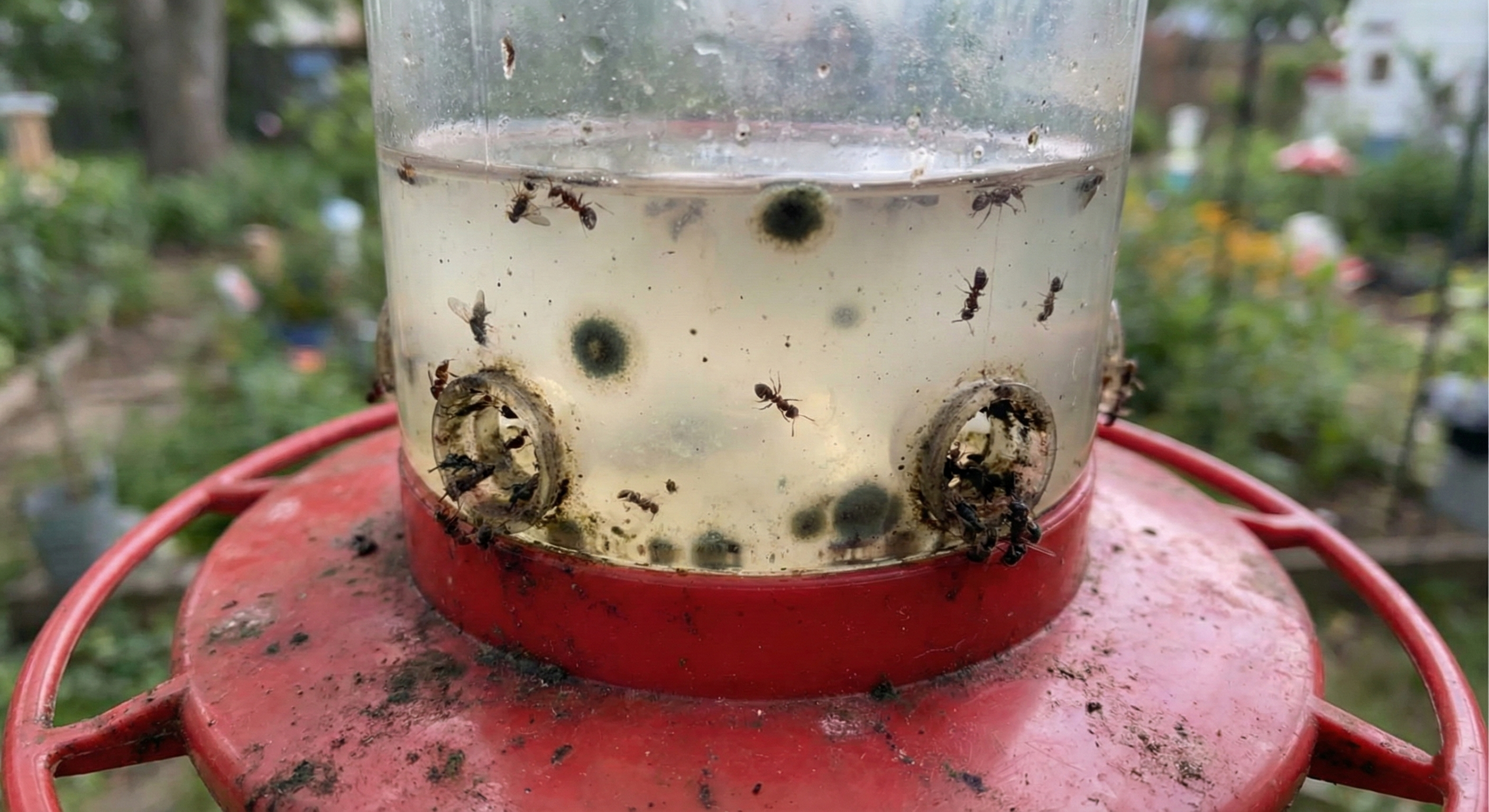
Even the most perfectly crafted nectar is only as safe as the vessel holding it. To prevent dangerous fermentation, you must adhere to a strict freshness clock.
According to the National Audubon Society, the ambient temperature dictates your cleaning schedule:
- Hot weather above 85°F:Empty and clean daily or every other day.
- Temperate weather 70°F - 84°F: Empty and clean every three days.
- Cooler weather below 70°F:Empty and clean twice per week.
Spoilage Signs You Should Never Ignore: If you step outside to observe your feeder and notice any cloudiness, floating white particles, black mold spots, or heavy insect contamination, dump the nectar immediately, regardless of how recently you filled it.
Safe Cleaning Practices
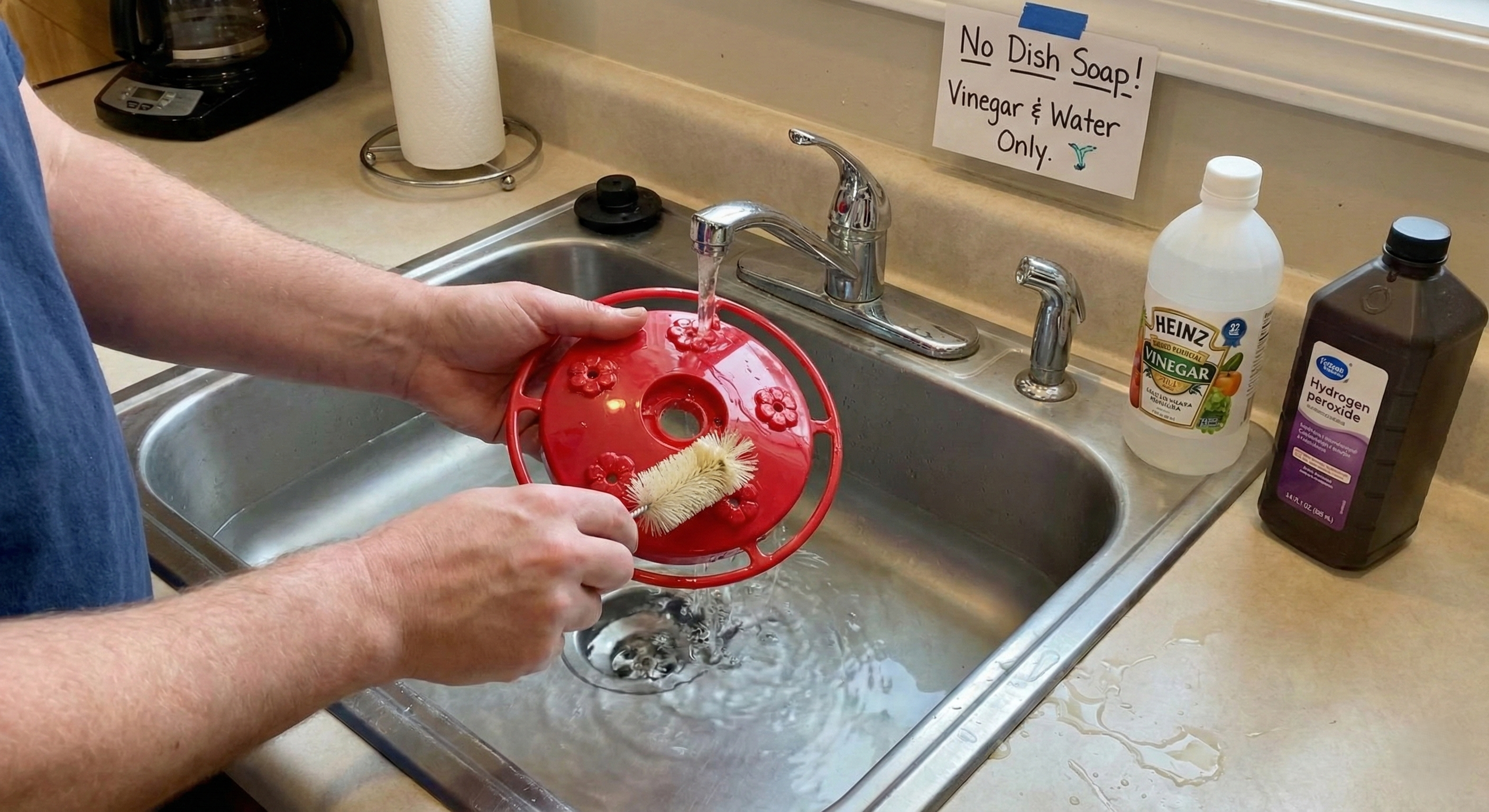
When cleaning, avoid traditional dish soaps, which leave behind harmful, flavor-tainting residues. Instead, scrub the reservoir and ports using hot tap water mixed with a splash of hydrogen peroxide or a weak white vinegar solution. A specialized bottlebrush is essential for reaching into small crevices.
Feeder Placement And Seasonal Adjustments
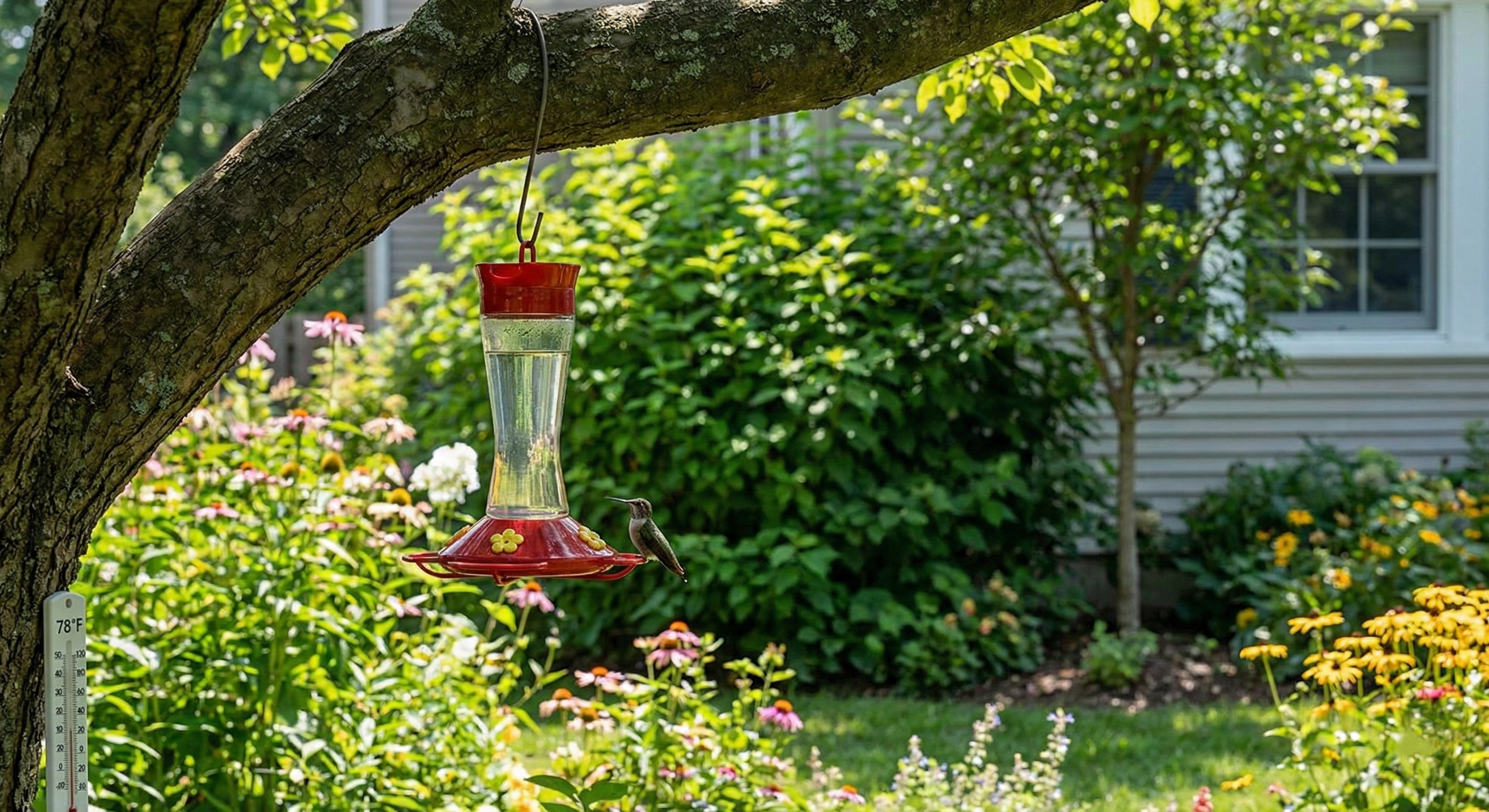
Hanging your feeder is akin to setting a stage for these magnificent performers. Placement matters immensely for both their safety and the longevity of the nectar.
Whenever possible, hang your feeder in a spot that receives dappled shade or is protected from the intense mid-day sun. Direct heat rapidly accelerates sugar fermentation.
Additionally, while you want the feeder visible from your window, ensure it is positioned within 10 to 15 feet of a tree or shrub. This provides the hummingbirds with a safe, immediate retreat from predators like hawks or neighborhood cats.
Cold Weather Tweaks:During prolonged cold snaps or heavy rainy spells, a hummingbird's energy demands skyrocket.
The Cornell Lab of Ornithology notes that floral nectar naturally varies in concentration, and during these harsh conditions, you can safely offer a slightly stronger mix-up to 1/3 cup of sugar per 1 cup of water.
However, this is a temporary, targeted exception. Once the weather normalizes, return immediately to the standard 4:1 ratio.
Natural Alternatives And Pest Prevention
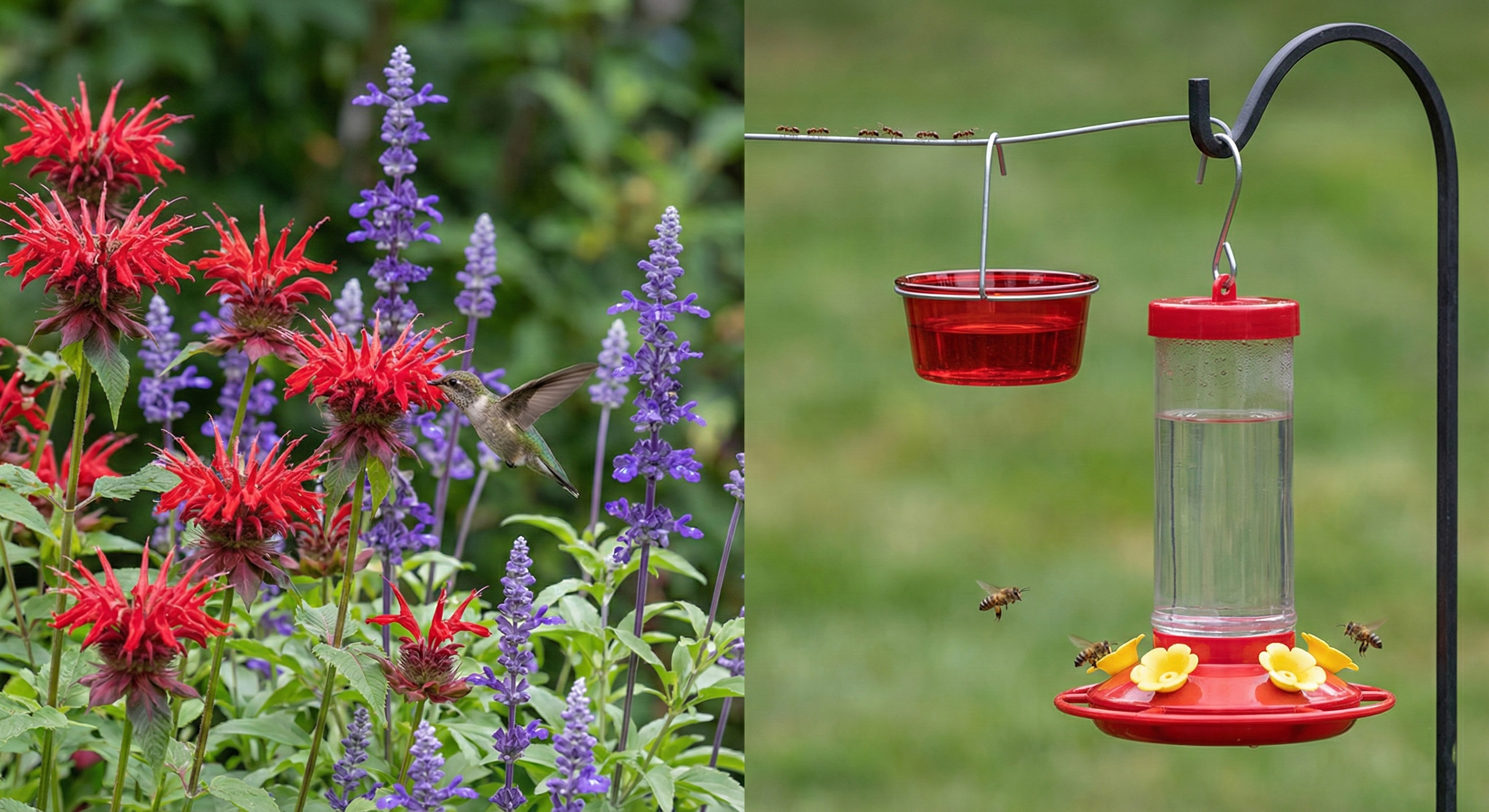
If your goal is to support hummingbirds without the upkeep of mixing sugar water, you can absolutely do so, but not by using a sugar substitute in your feeder. As noted, honey, molasses, and artificial sweeteners are highly dangerous.
The best no-sugar alternative is to plant native, nectar-bearing flowers, effectively turning your entire yard into a natural food map.
Whether you use plants, feeders, or both, the experience is vastly improved when you manage common feeder pests:
- Ants: Ants are relentless sugar seekers. Protect your nectar by hanging an ant moat, a small water-filled cup above the feeder. Ensure the feeder hangs freely and doesn't brush against branches or railings that ants can use as a bridge.
- Bees and Wasps:Choose a feeder style equipped with bee guards, or a saucer-style feeder where the nectar sits too low for insects to reach but is easily accessible to a hummingbird's long tongue.
- Spill Control:The most effective pest control is cleanliness. Sticky sugar trails on the outside of the feeder are an open invitation to pests. Wipe down the exterior thoroughly after every refill.
Frequently Asked Question
How To Make Homemade Hummingbird Feed?
Mix 1 part refined white sugar with 4 parts water, dissolve completely, cool to room temperature, and fill a clean feeder. Skip dye and substitutes.
How Much Sugar For 1 Cup Of Water For Hummingbirds?
Use ¼ cup refined white sugar per 1 cup water, that’s the standard 1:4 sugar-water mix.
Do I Need To Boil The Water?
Many trusted recipes use boiling water to dissolve sugar, but Audubon notes boiling isn’t required; what matters is a clean, fully dissolved mix.
Can I Use Honey Instead Of Sugar?
No. Penn State Extension warns against honey because fermented honey can cause a fatal fungal disease in hummingbirds.
Why Can’t I Use Brown Sugar Or Molasses?
Audubon advises using refined white sugar only; other sweeteners can contain additional components that may be detrimental.
Do I Need Red Food Coloring?
No. It’s unnecessary; hummingbirds are attracted to the feeder’s red parts, and authorities say dye isn’t needed and could be harmful.
How Often Should I Empty And Clean The Feeder?
Audubon’s schedule: hot weather = daily/every other day, temperate = every three days, cool = twice per week, and clean immediately if you see mold or insects.
How Long Does Nectar Last?
It depends on weather and use. Follow the schedule above, and replace immediately if nectar turns cloudy, moldy, or insect-filled.
What’s A Hummingbird’s Favorite Food?
Naturally, it’s flower nectar plus tiny insects; a feeder is a supplement, and avoiding pesticides supports the insects they also eat.
What Can I Use Instead Of Sugar Water For Hummingbirds?
Don’t substitute sweeteners. If you want to skip sugar water, focus on nectar-bearing native plants and good habitat instead.
Is A 3:1 Ratio Okay?
In cold, rainy spells, Cornell Lab notes you can make it slightly stronger, up to about ⅓ cup sugar per cup of water, but don’t make it your default.
Is A 2:1 Ratio Safe?
Avoid it. Penn State Extension cautions that stronger solutions may be harmful; stick with the standard mix for everyday feeding.
How Can I Keep Ants Off My Hummingbird Feeder?
Use an ant moat, prevent bridges from nearby surfaces, and wipe spills-those three steps solve most ant problems fast.
How Can I Keep Bees Away From My Feeder?
Use a feeder with bee guards or a less-drippy style, place it thoughtfully, and keep everything clean. Spilled nectar is the main magnet.
How Can I Make My Own Hummingbird Feeder?
If someone builds one, prioritize a design that comes apart for scrubbing and uses smooth ports-then follow the same nectar ratio and cleaning schedule.
What Does It Mean When A Hummingbird Keeps Visiting You?
Most often, it means the bird learned your feeder location and may be defending a food source; any symbolic meaning is personal, not a scientific fact.
Conclusion
Creating a haven for hummingbirds requires the same attention to detail as crafting a beautifully structured story; the foundation must be flawless for the magic to happen.
By adhering strictly to the 4:1 ratio of refined white sugar to water, you provide a reliable, safe energy source that mimics the natural world. Avoid the temptation to improvise with organic sugars or artificial dyes.
Instead, focus your efforts on keeping the nectar fresh and the feeder pristine. Your reward will be a garden alive with the brilliant, high-speed artistry of these remarkable birds.
Jump to
How To Easily Make Hummingbird Food: Mimicking Natural Nectar
The Universal 4:1 Hummingbird Food Recipe
The Science Of Safety: What NEVER To Feed Hummingbirds
Scaling The Recipe: How Much Sugar For 1 Cup? And Beyond
The Freshness Clock: Keeping The Nectar Safe
Feeder Placement And Seasonal Adjustments
Natural Alternatives And Pest Prevention
Frequently Asked Question
Conclusion

Marcus Vale
Author
Marcus Vale is the founder of Island Flave and a travel writer covering global destinations, famous places, island escapes, cultural landmarks, and the people connected to remarkable locations around the world.
Guided by curiosity and careful research, Marcus explores what makes places memorable — from history, food, festivals, and local traditions to the artists, athletes, musicians, actors, icons, and public figures linked to certain cities, islands, neighborhoods, and landmarks.
At Island Flave, Marcus creates clear, well-researched, and easy-to-read guides built around public information, responsible storytelling, and helpful destination context. His writing focuses on cultural relevance, neighborhood-level insight, travel value, and the public stories and cultural connections that help readers understand where to go, what a place is known for, who is connected to it, and why it matters.
Rather than chasing gossip or private details, Marcus focuses on the bigger picture: the places people talk about, the meaning behind them, and the cultural details that make them worth knowing.
Latest Articles
Popular Articles